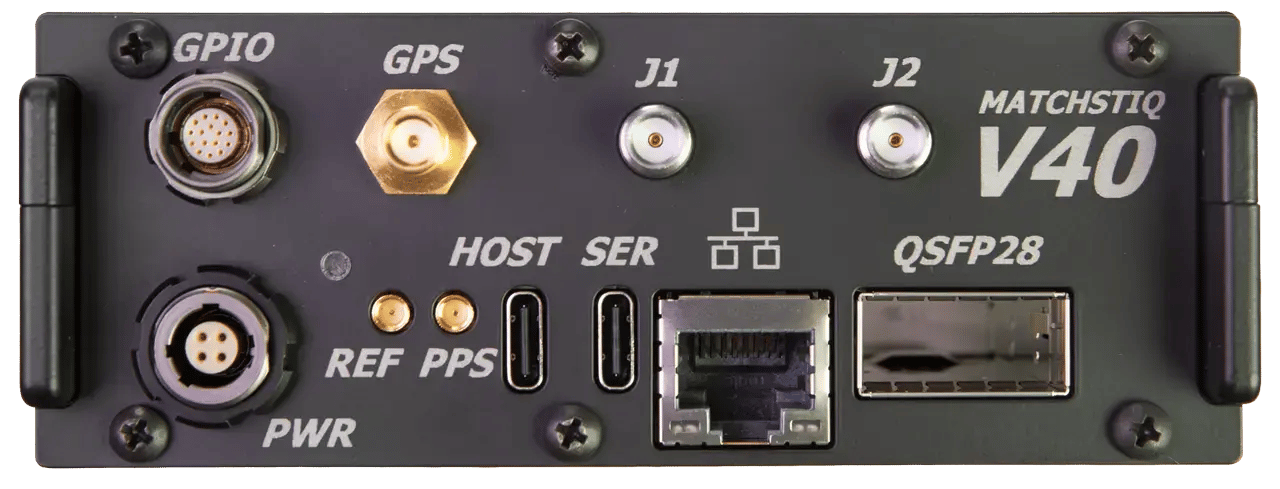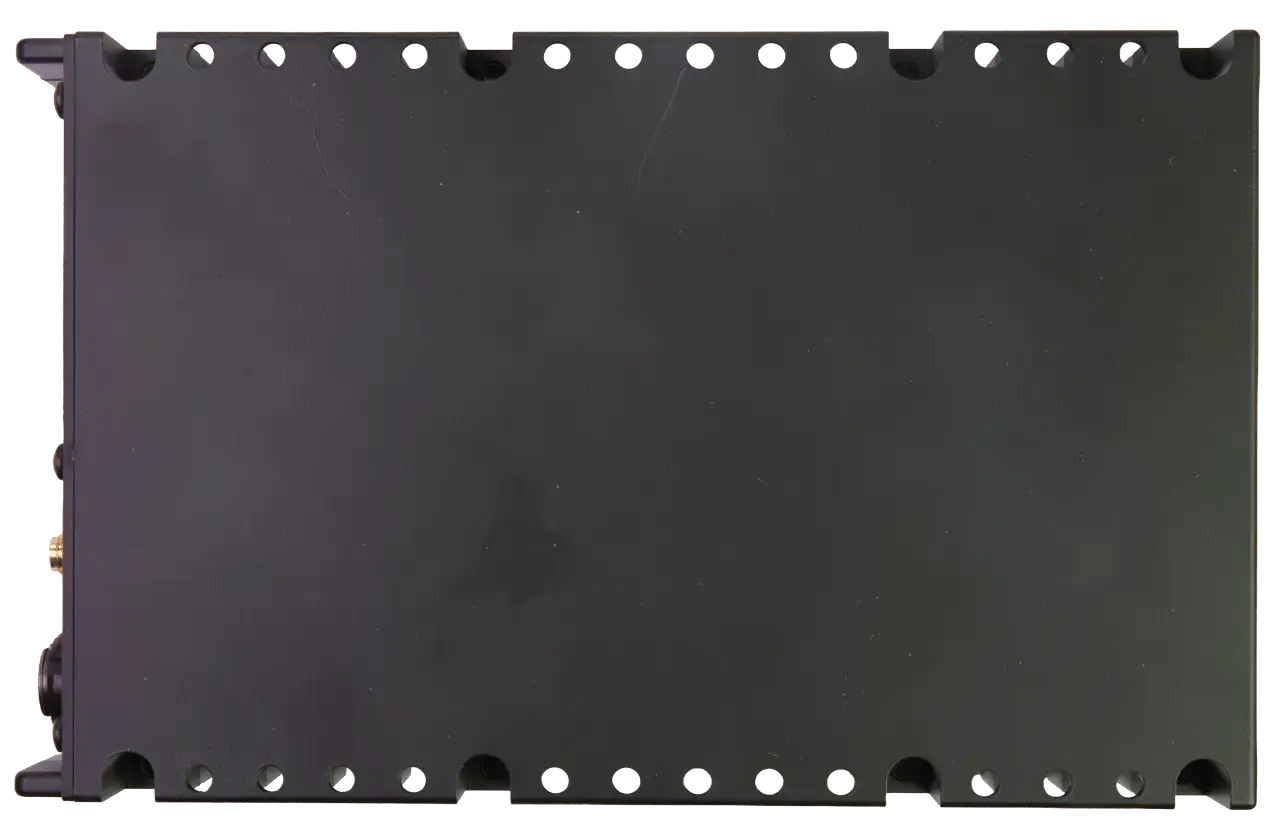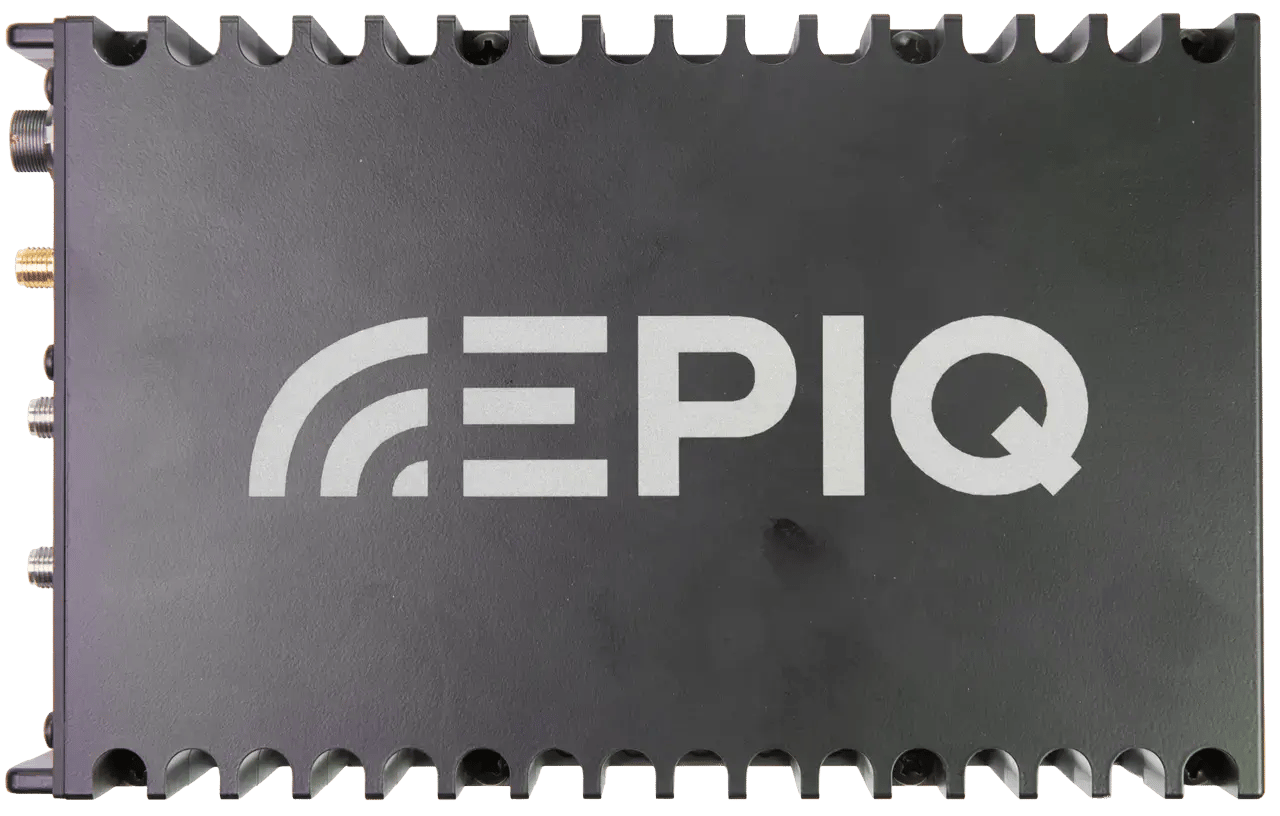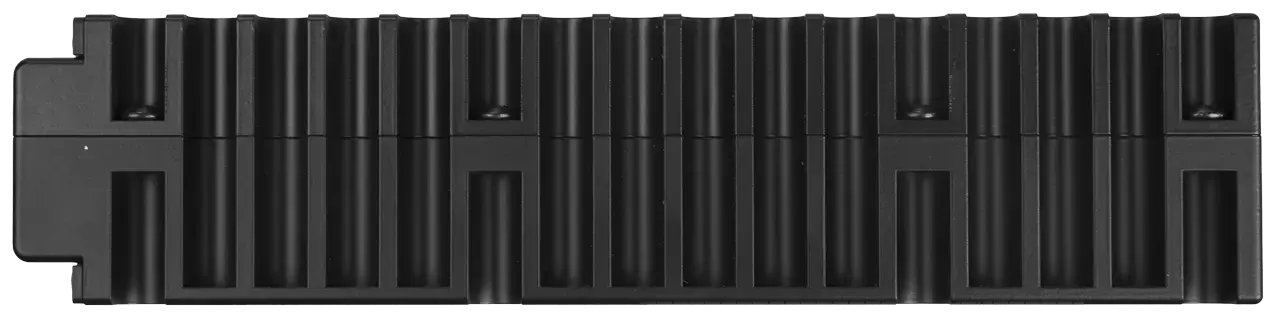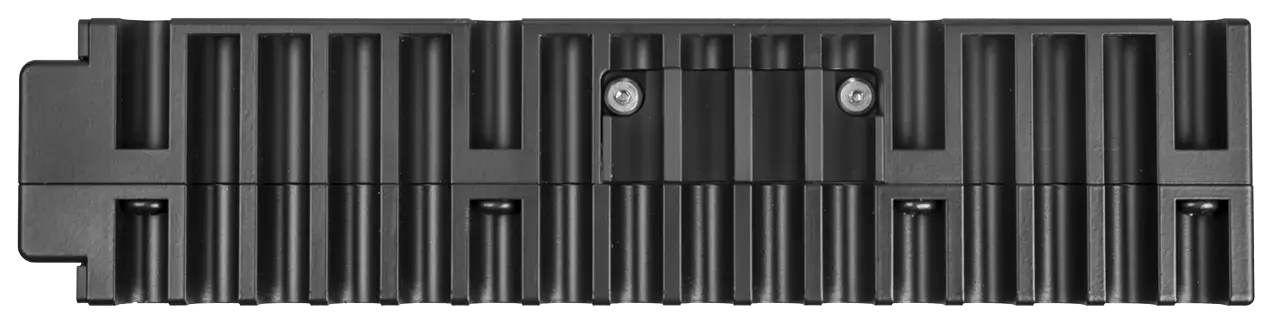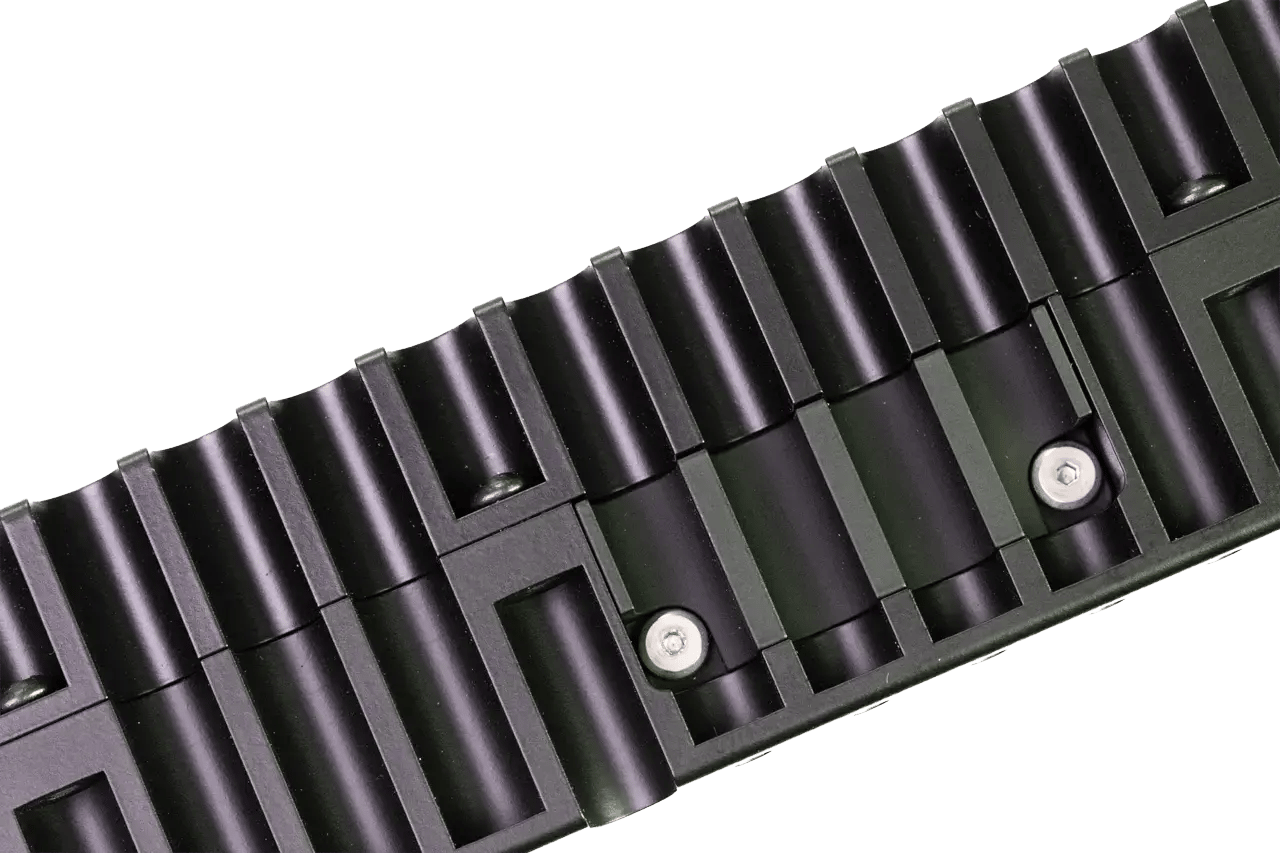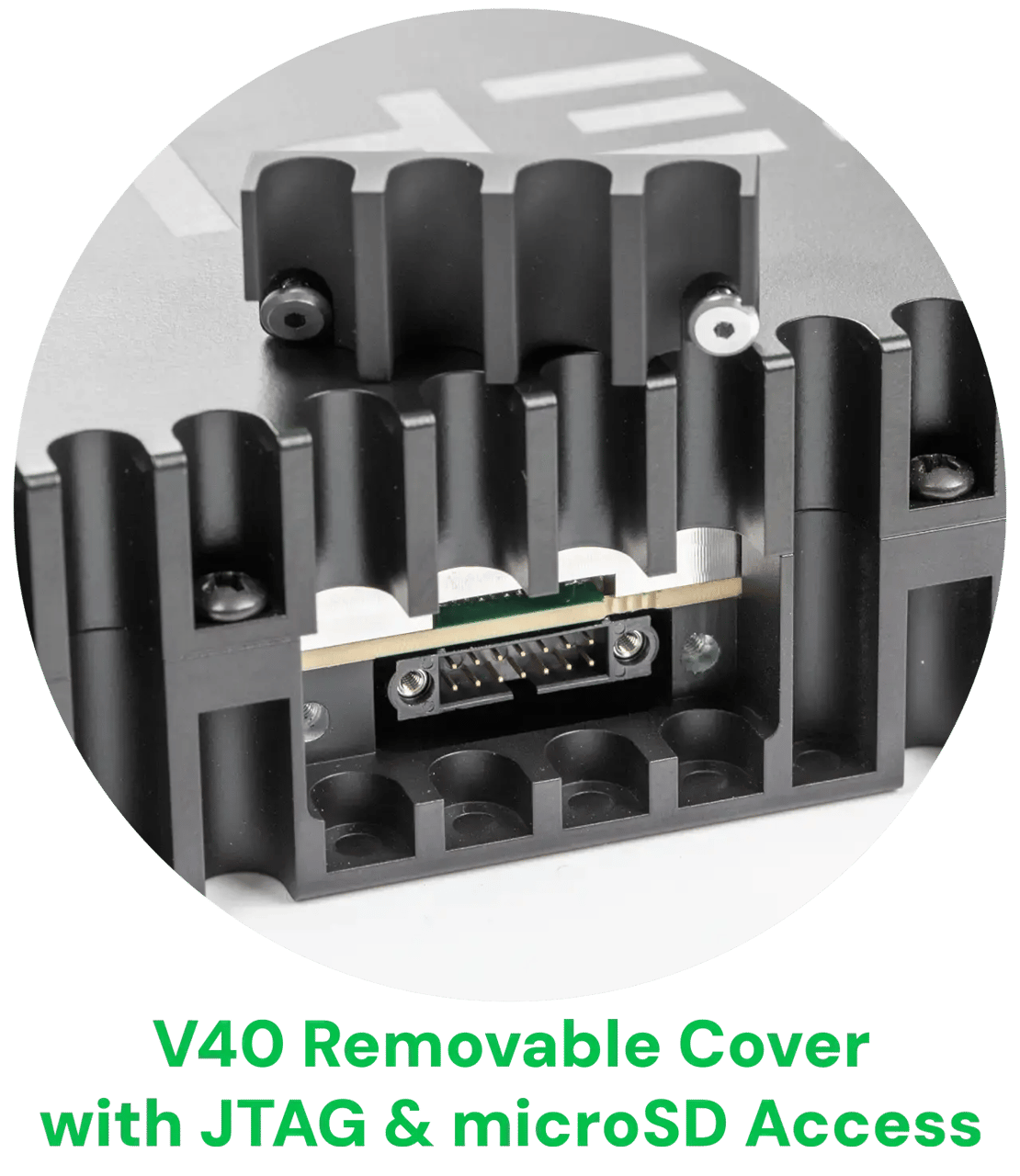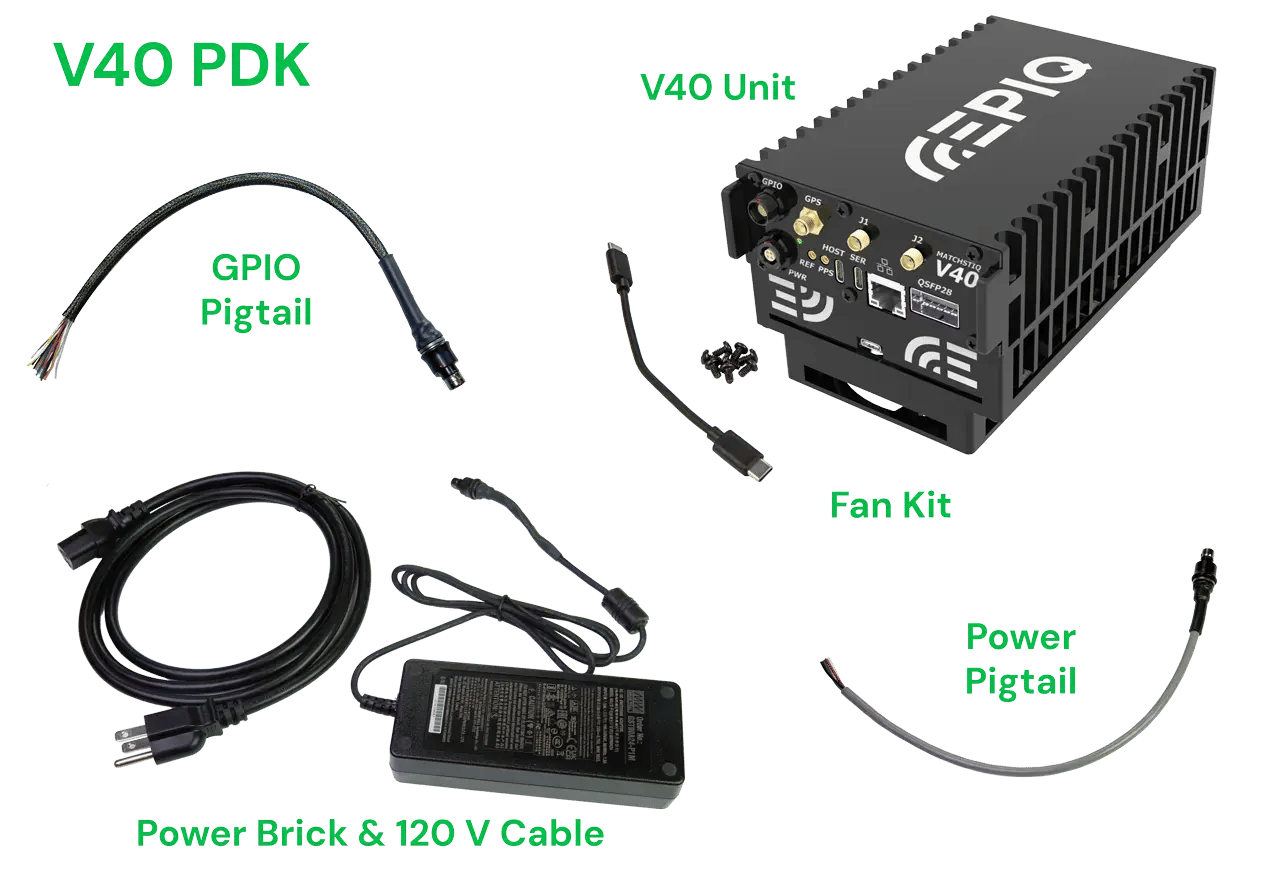
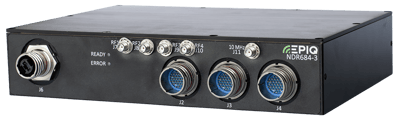
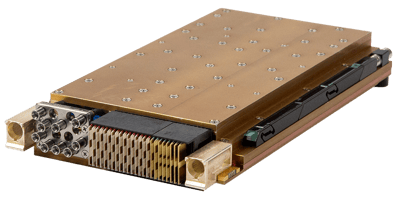
MATCHSTIQ™ V40
EARLY ACCESS
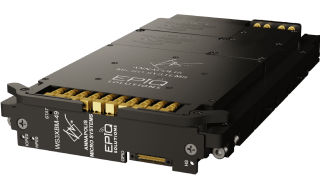
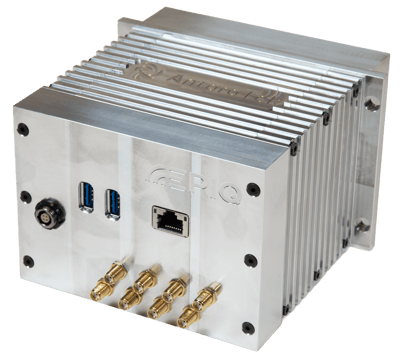
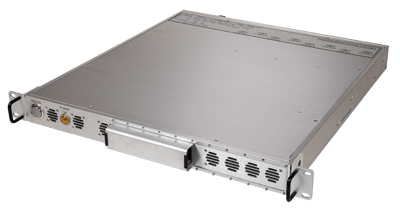
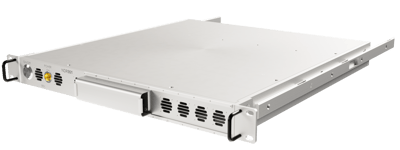
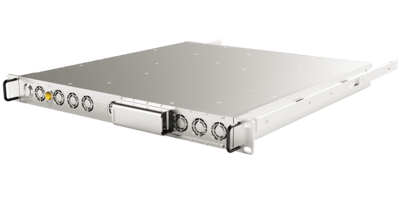
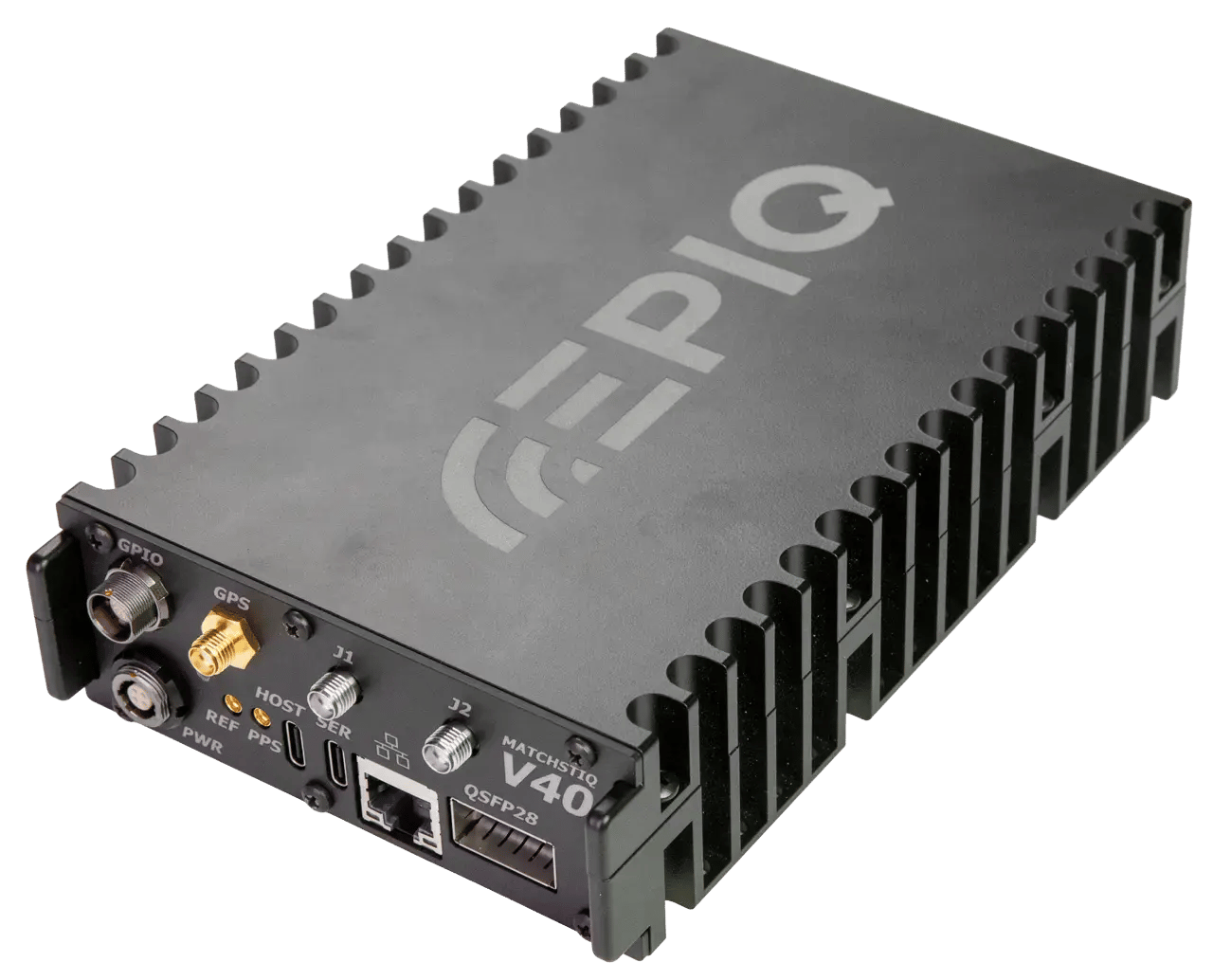
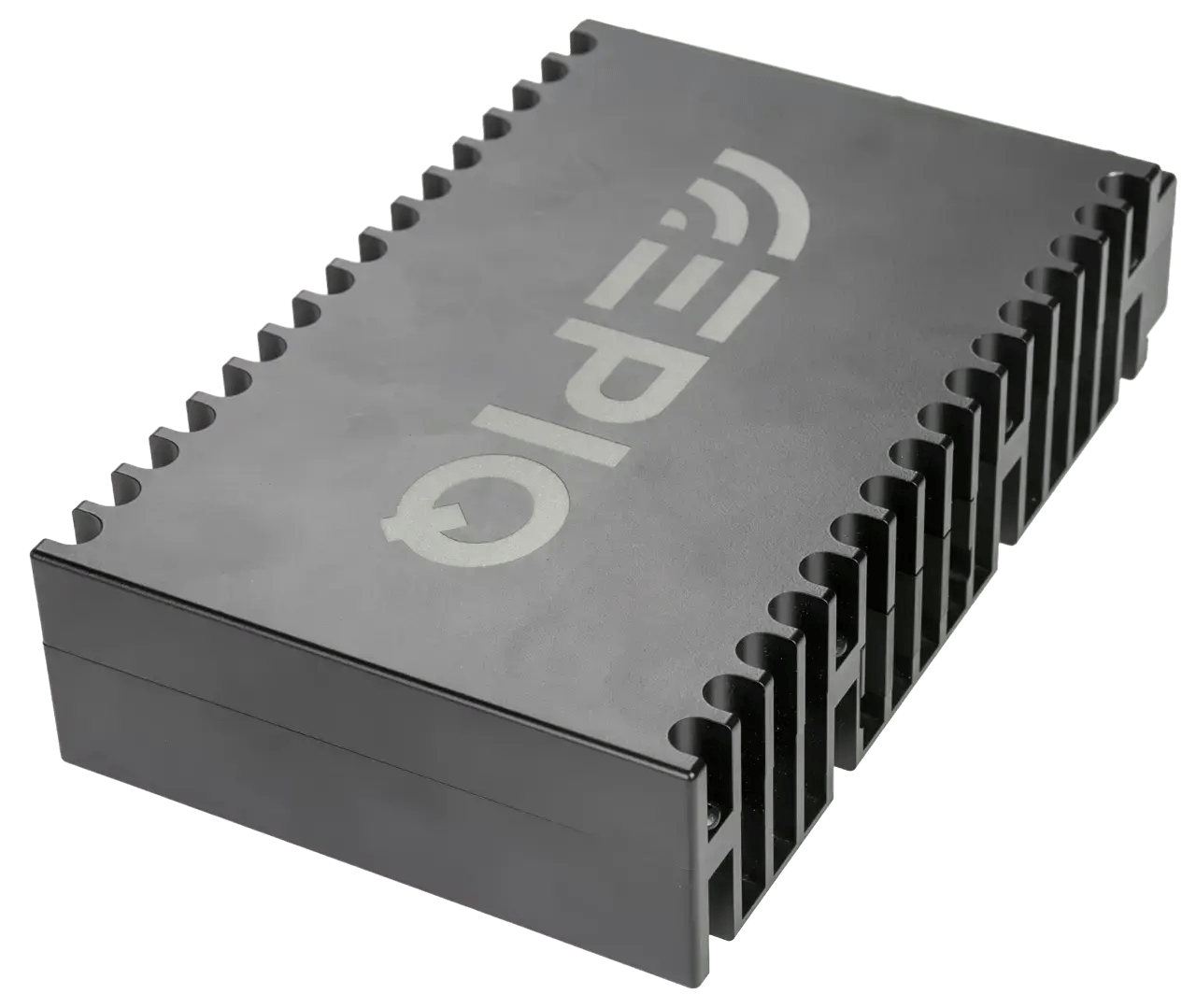
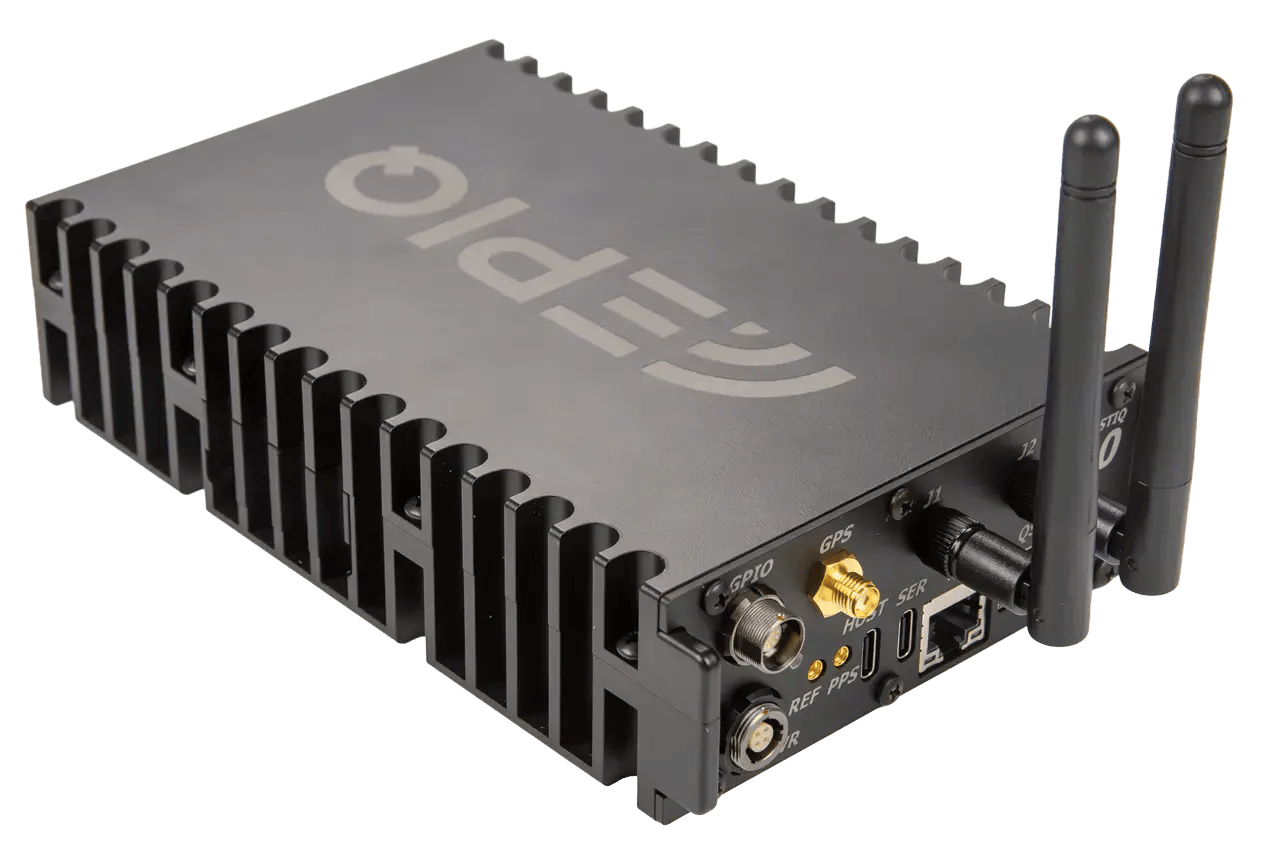
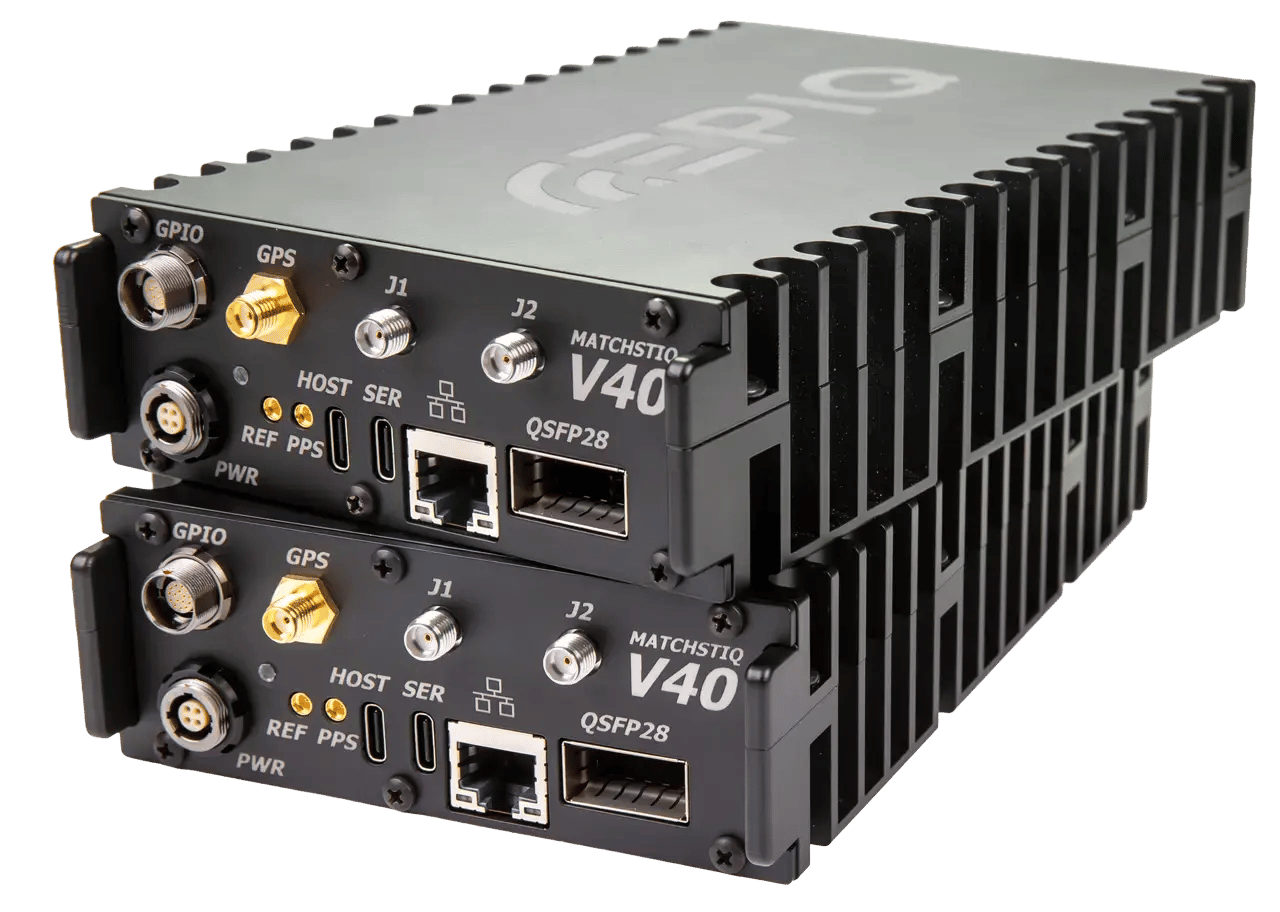
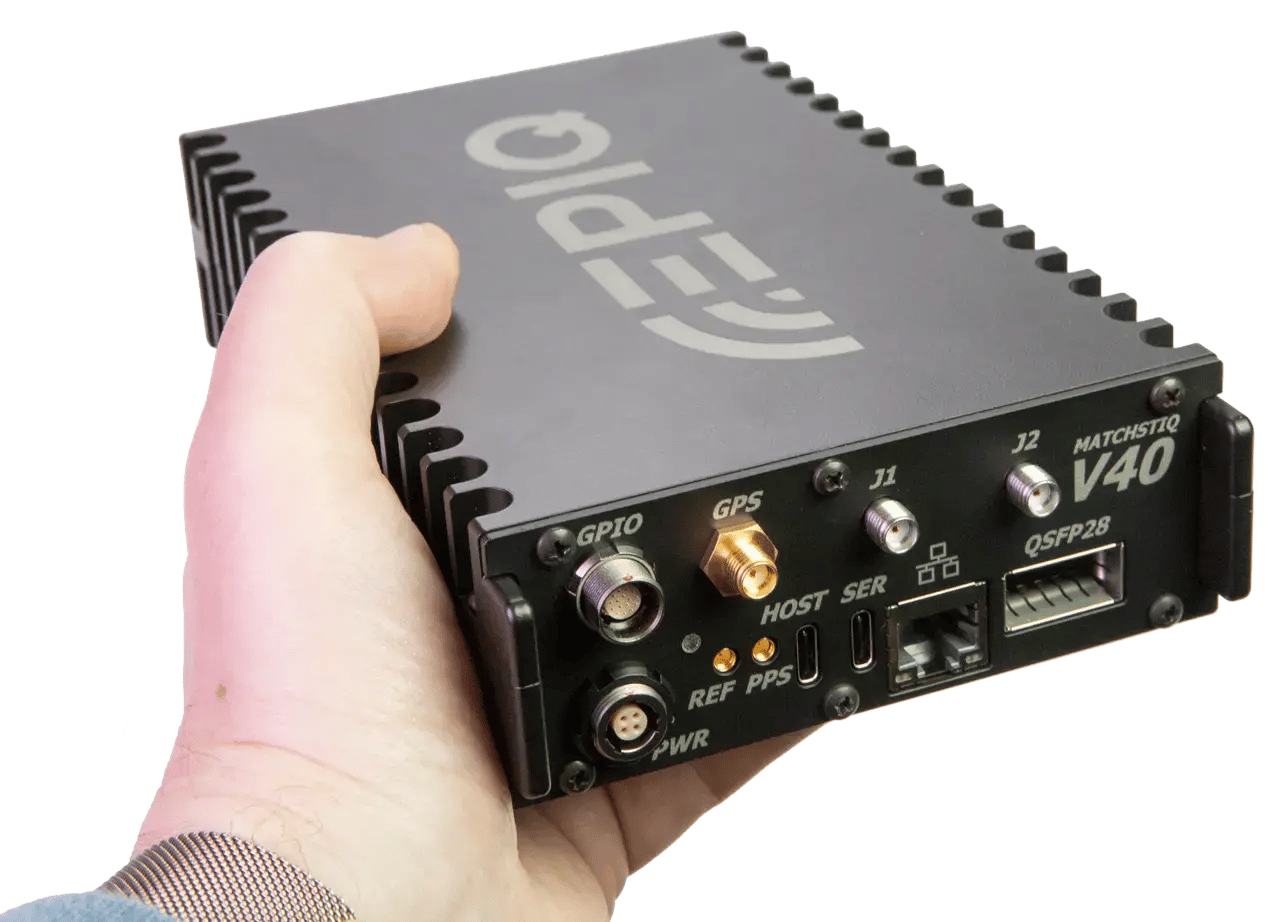
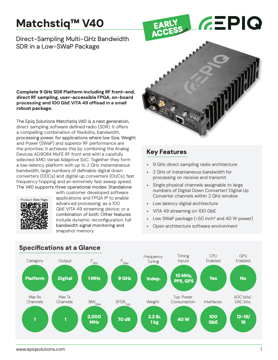
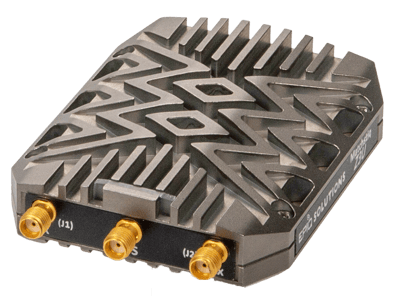
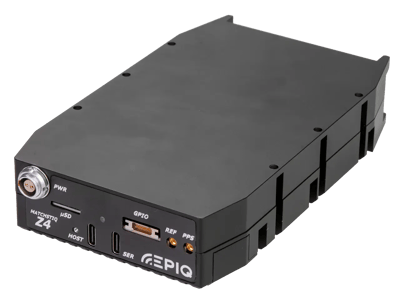
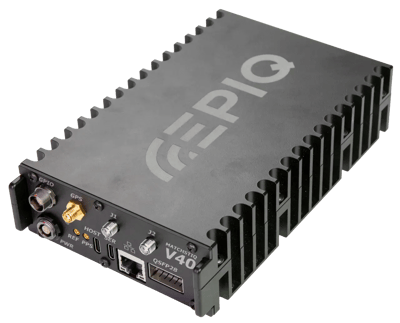
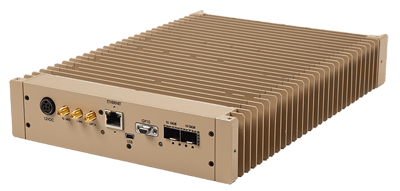
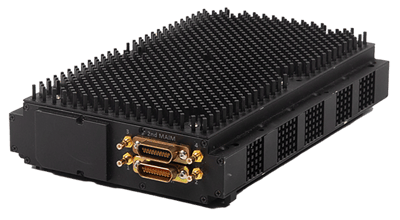
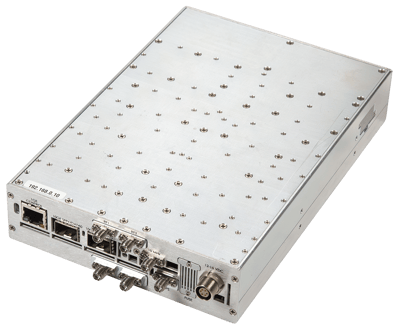
The Epiq Solutions Matchstiq V40 is a next generation, direct sampling software defined radio (SDR). It offers a compelling combination of flexibility, bandwidth, processing power, for applications where low Size, Weight and Power (SWaP) and superior RF performance are the priorities. It achieves this by combining the Analog Devices AD9084 MxFE RF front end with a carefully selected AMD Versal Adaptive SoC. Together they form a low-latency platform with up to 2 GHz instantaneous bandwidth, large numbers of definable digital down converters (DDCs) and digital up converters (DUCs), fast frequency hopping and an extremely fast sweep speed.
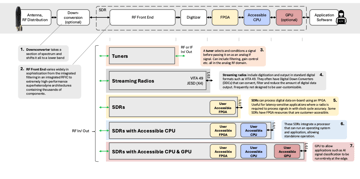
The V40 supports three operational modes: Standalone with customer developed software applications and FPGA IP to enable advanced processing; as a 100 GbE VITA 49 streaming device; or in a combination of both. Other features include dynamic reconfiguration, full bandwidth signal monitoring and snapshot.
FEATURES
-
9 GHz direct sampling radio architecture
-
2 GHz of instantaneous bandwidth for processing on receive and transmit
-
Single physical channels assignable to large numbers of Digital Down Converter/ Digital Up Converter channels within 2 GHz window
-
Low latency digital architecture
-
VITA 49 streaming on 100 GbE
-
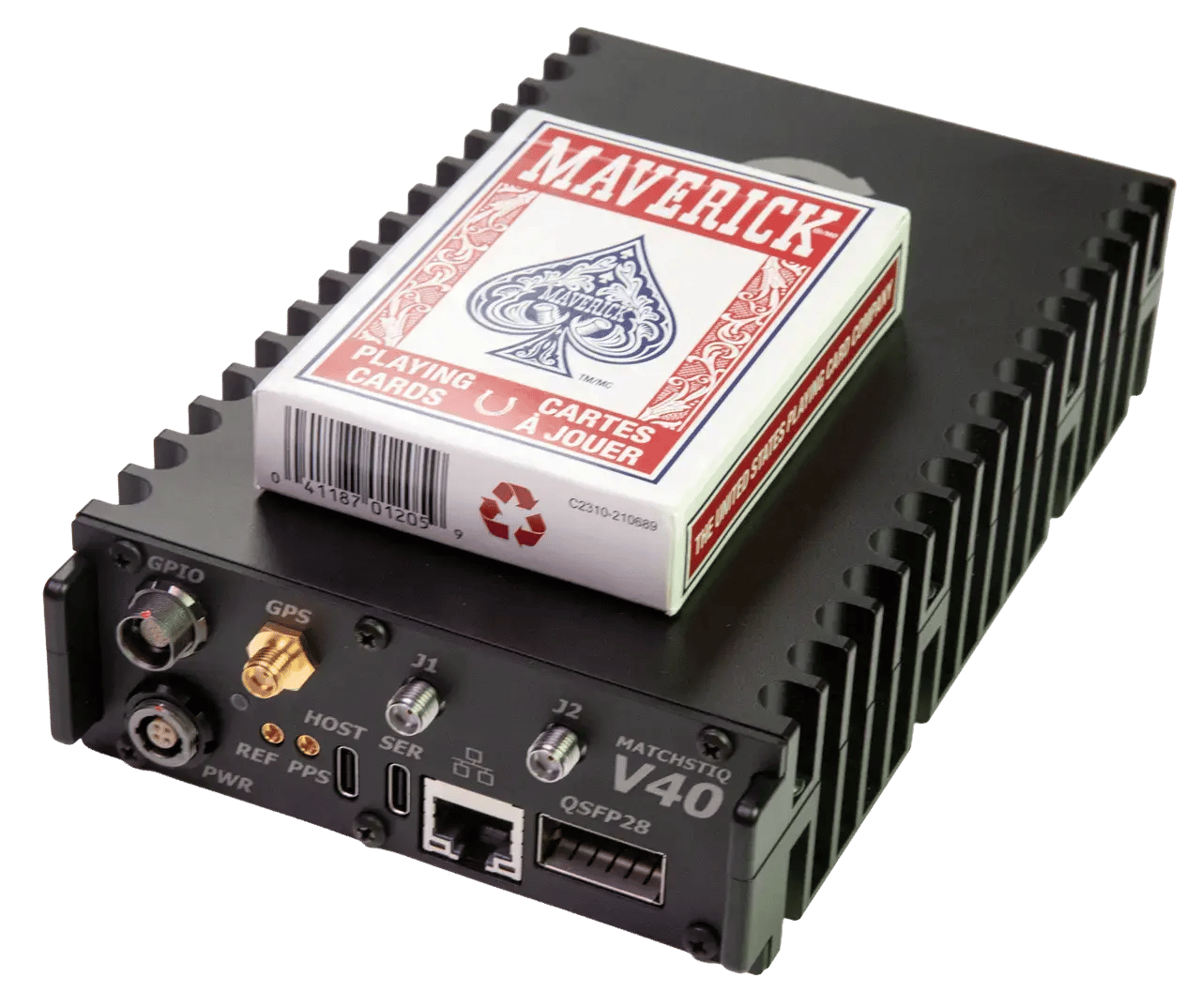
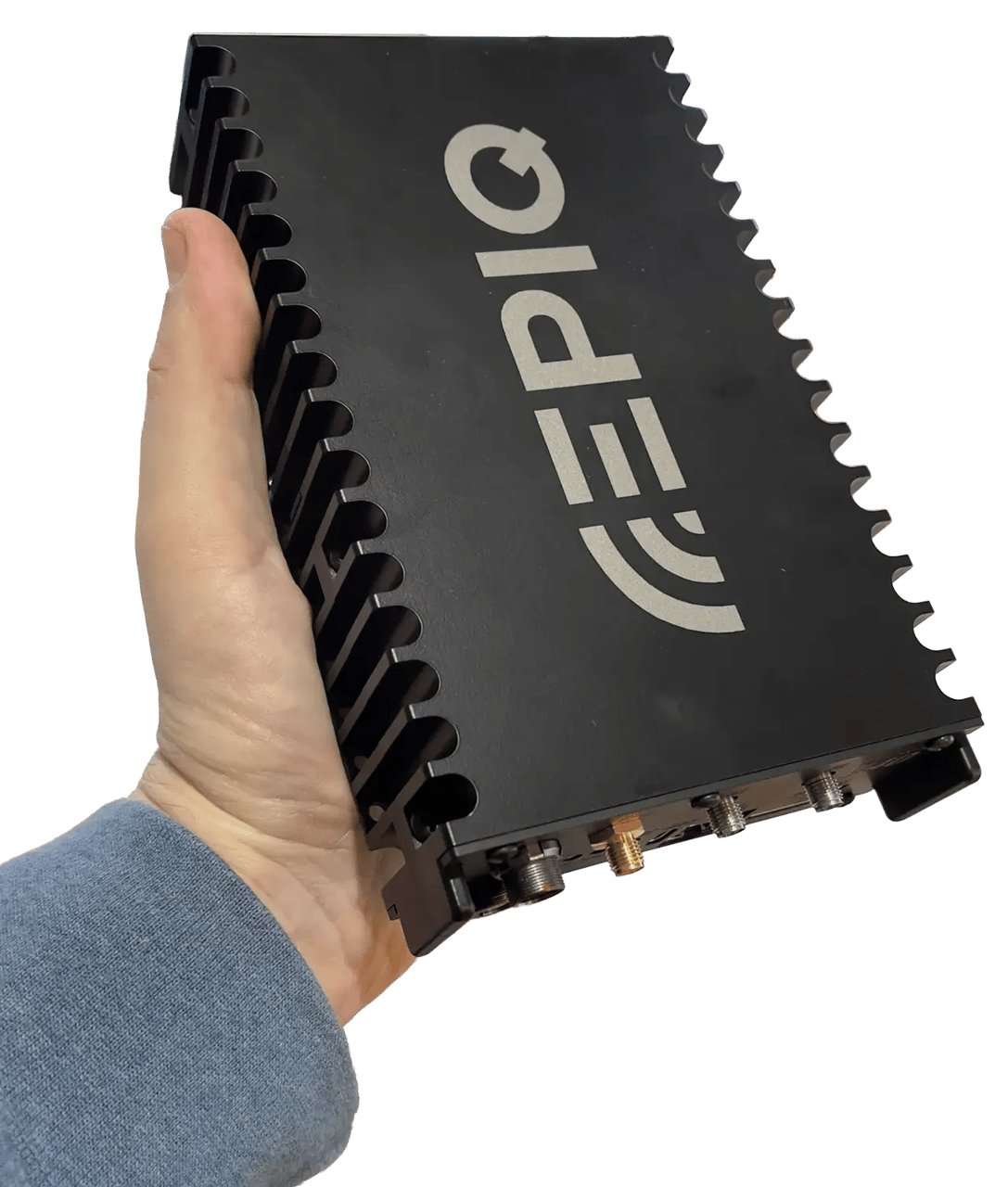
Low SWaP package (<50 inch3 and 40W power)
-
Open architecture software environment
Platforms &
Applications
Example Platforms
Resources
Resource type
Products
Industry
Datasheets
Epiq - datasheet - NDR318
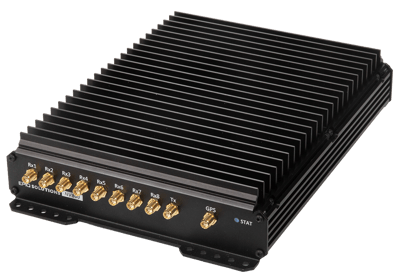
The NDR318 is an affordable standalone 8-Channel wideband high performance SDR that converts the HF/VHF/UHF spectrum to digital IF (I/Q or Real) data over 10 Gigabit Ethernet interfaces. The NDR318 includes 8 independent tuner's that cover RF signals from 2 MHz to 6 GHz with a 40 MHz instantaneous bandwidth. Each channel can tune independently or the tuners can operate phase coherently for applications such as beam forming or direction finding (the unit supports both 4-channel and 8-channel phase coherent operation). To enable Geolocation applications, the NDR318 includes an on-board GPS receiver, an external 1PPS input, precision time-tagged digital IF data (formatted based on the VITA-49 standard) and a tunable calibration signal that covers 25 MHz to 6 GHz.
Epiq - datasheet - NDR358
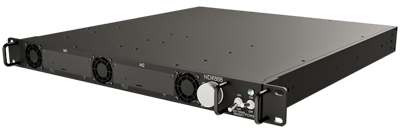
The NDR358 high performance RF SDR is an 8 channel, super-heterodyne downconverter that covers RF signals from 20 MHz to 6 GHz and supports both independent and phase coherent tuning. The NDR358 is housed in a 1U, 19 inch equipment frame. Integrated high dynamic range 16-bit Analog-to-Digital converters (ADC’s) are utilized to digitize an 80 MHz wide IF at 256 Msps sample rate. Command and control of the NDR358 are via an Ethernet interface and power is derived from a 115 VAC external power supply input. Total power consumption is 145 Watts. An on-board Xilinx Kintex UltraScale FPGA is used for the channelizer, VITA49 formatter, data multiplexer and four 10 Gigabit Ethernet Digital IF data interface.
Epiq - datasheet - NDR364
The NDR364 high performance SDR is a 4-channel, superheterodyne downconverter that covers RF signals from 20 MHz to 6 GHz. Integrated high dynamic range 16-bit Analogto-Digital converters (ADC’s) are utilized to digitize a 125 MHz wide IF at 368 Msps sample rate. The NDR364 includes a builtin GPS receiver and accepts a 1PPS input to support precision timing applications. Command and control of the SDR are via a Gigabit Ethernet interface and power is derived from a DC external power supply input. Total power consumption is 38 Watts. An on-board Kintex UltraScale series FPGA is used for the channelizer, selectable decimation stages, VITA-49 formatter, data multiplexer and 10 Gigabit Ethernet Digital IF data interfaces.
Epiq - datasheet - NDR374
The NDR374 is a 4 channel SOSA Aligned 3U VPX SDR that covers RF signals from 2 MHz to 8 GHz . It is a rugged conduction cooled 3U VPX module, per VITA 46/48/65/67. The NDR374 is designed as a 3U open architecture version of the existing NDR358 RF SDR to include RF performance, command set and multiple DSP-based modes of operation (the NDR374 enables efficient system integration for existing NDR358 users). The VPX module supports both independent and phase coherent tuning and two units can support 8 Channel coherent operation. Integrated high dynamic range 16-bit Analog-to-Digital converters (ADC’s) are utilized to digitize an 125 MHz wide IF at 368 Msps sample rate.
Epiq - datasheet - NDR504
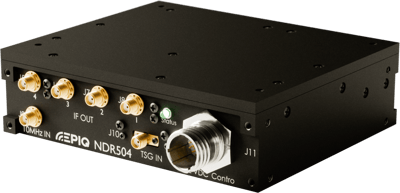
The increasing number of signals of interest above 18 GHz, including mmWave 5G and beyond, has made it ever more critical to extend the frequency coverage of intercept systems. Historically, this has been achieved using in-house designed, exquisite custom assemblies. The NDR504 breaks this paradigm with an off-the-shelf standard product that can be widely deployed in existing and new systems.
Epiq - datasheet - NDR551
The NDR551 microwave SDR is a 4 channel, super-heterodyne downconverter that covers RF and Microwave signals from 20 MHz to 18 GHz. It is housed in a 1U, 19 inch equipment frame with 19”W x 1.75”H x 18”D overall dimensions. Integrated high dynamic range 16-bit Analog-to-Digital converters (ADC’s) are utilized to digitize an 80 MHz wide IF at 256 Msps sample rate. Command and control of the digital tuner are via an Ethernet interface and power is derived from a 115 VAC external power supply input. Total power consumption is 175 Watts. An onboard Kintex UltraScale series FPGA is used for the channelizer, the VITA-49 formatter, data multiplexer and the 10 Gigabit Ethernet Digital IF data interfaces.
Epiq - datasheet - NDR562
The NDR562 microwave SDR is a super-heterodyne downconverter that covers RF and Microwave signals from 20 MHz to 18 GHz. The tuner has a 1 GHz analog IF output with selectable bandwidths of 500 MHz, 320 MHz and 200 MHz. An integrated high dynamic range 14-bit Analog-to-Digital converter (ADC) is utilized to digitize a 500 MHz wide IF at a 1344 Msps sample rate. An onboard Kintex UltraScale series FPGA is used for the channelizer, the VITA-49 formatter, data multiplexer and the 40 Gigabit Ethernet Digital IF data interface. The Digital IF output supports bandwidths of 80 MHz, 100 MHz, 160 MHz, 250 MHz, 320 MHz and 500 MHz.
Epiq - datasheet - NDR585
The NDR585 is a 4 channel, 3U SOSA VPX microwave tuner platform that provides frequency coverage from 20 MHz to 18 GHz. The NDR585’s industry leading channel density minimizes system level SWaP. Each of the 4 channels provides a 1 GHz analog IF output with a 500 MHz instantaneous bandwidth. The channels can tune both independently and phase coherently and multiple NDR585 units can be synchronized for phase coherent operation.
Epiq - datasheet - NDR664
The NDR664 is a 4 channel, 3U SOSA aligned microwave transceiver that provides frequency coverage from 20 MHz to 18 GHz. The NDR664’s industry leading channel density minimizes system level SWaP. Each of the 4 channels provides a 1 GHz analog IF output with a 500 MHz instantaneous bandwidth. The 2 tuner channels can tune both independently and phase coherently and the 2 transmit channels can tune both independently and phase coherently and multiple NDR664 units can be synchronized for phase coherent operation. The NDR664 incorporates a super-heterodyne RF conversion architecture to minimize spurious products and yield high dynamic range performance.
Epiq - datasheet - Sidekiq™ VPX400
The MORA-compliant/SOSA-aligned Sidekiq VPX400 is a modular, multichannel RF transceiver solution that enables rapid development of converged SIGINT/EW platforms while reducing slot count requirements, power consumption, and engineering-related cost. Its modularity complies with MORA 2.4 standards and aligns with the SOSA™ Technical Standard while its core software-defined radio (SDR) technology future-proofs applications by allowing quick adoption of emerging capabilities. Sidekiq VPX400 is also interoperable with Sidekiq VPX410 for access to RF spectrum up to 18 GHz.
Epiq - datasheet - Sidekiq™ VPX410
Sidekiq VPX410 is a revolutionary, CMOSS/SOSA - aligned softwaredefined radio (SDR) multichannel RF tuner solution enabling SIGINT/EW/ Communications use cases in a 3U VPX form factor. Combining four RF receive tuners plus one RF transmit tuner in a single 3U VPX card, Sidekiq VPX410 enables access to RF spectrum between 1MHz and 18 GHz with up to 1 GHz of instantaneous bandwidth per channel. Both phase coherent and independent tuning modes are available to enable a range of operational use cases, including fast spectral scanning, direction finding, rapid frequency hopping and electronic attack. Sidekiq VPX410 is interoperable with Sidekiq VPX400 and other 3U VPX digitizers and SDRs.
Epiq - datasheet - Matchstiq™ Z3u
The Matchstiq Z3u is a field-ready, complete software-defined radio (SDR) platform designed to deliver a fully integrated RF transceiver plus signal processing solution in the smallest possible form factor. Measuring just 3.64” x 2.74” x 0.75” and weighing 5.6 ounces, the Matchstiq Z3u is ideal for on-the-go signal processing applications. An integrated magnetic mount allows the platform to attach to a cell phone or other portable device, deriving power and providing communications through a single USB-C port. As a completely stand-alone platform, Matchstiq Z3u can execute signal processing applications locally on the AMD® Zynq® Ultrascale+ System on Chip (SoC), or interface to a host platform over USB 3.0 to execute applications on the host.
Epiq - datasheet - Sidekiq™ NV800
The NV800 is a high performance eight receive, one transmit SDR platform that enables rapid deployment for RF awareness applications. Capable of operating in either phase coherent or independent modes, the NV800 supports fixed frequency and fast frequency hopping modes of operation, both of which can support direction finding use cases. Fast frequency hopping on each channel can support total spectrum coverage of almost 500 GHz-per-second. The NV800 is easy to install, only requiring a 1GbE connection for POE++ and command & control (DC power input is also an option), and a 10GbE for high speed data streaming using VITA49.
Epiq - datasheet - Matchstiq™ X40
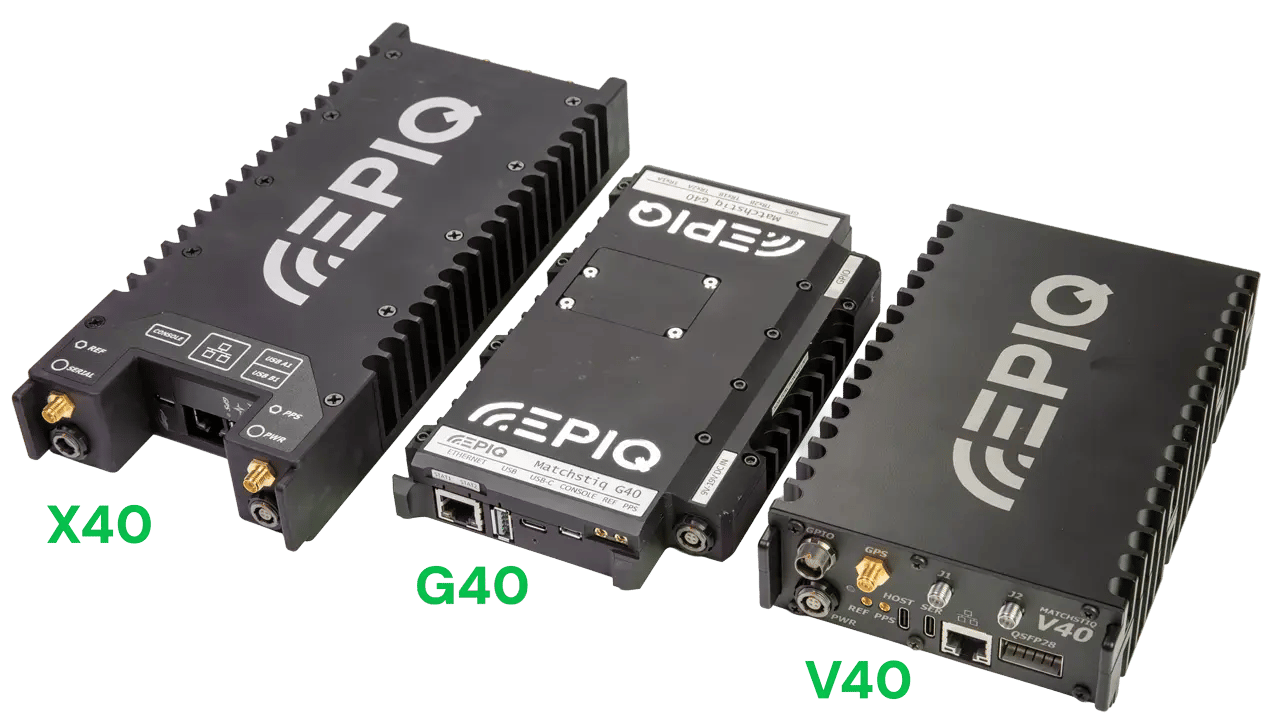
The Matchstiq™ X40 is a high-performance SDR and digital signal processing platform optimized for small form factor applications with challenging SWaP-C requirements. It has an unprecedented level of integration, which makes it ideal for applications like UxS payloads. The Matchstiq™ X40 combines an RF frontend capable of accessing up to 18 GHz with multiple digital transceiver channels, a high performance NVIDIA Orin NX 16G GPU/CPU, and an AMD Zynq Ultrascale+ FPGA. Loaded with high performance components, this SDR delivers powerful data processing and AI & ML capabilities at the RF edge.
Epiq - datasheet - NDR325
The NDR325 is a software defined payload packaged in a Modular Payload (Mod Payload) Design Standard, Rev. 5.0 compliant 1U form factor. It includes a 4-channel, superheterodyne tuner that covers RF signals from 20 MHz to 6 GHz and each channel provides a 500 MHz instantaneous bandwidth. The unit provides both independent and phase coherent tuning to support applications such as search, survey, direction funding and geolocation. An on-board Xilinx Zynq UltraScale+ RFSoC is used for the A/D converters, the channelizer, the VITA-49 formatter, the data multiplexer and multiple lower bandwidth DDCs. Internal Digital IF data is routed to integrated COTS processing (SMARC with the Intel® Atom™ x7-E3950 1.6 GHz Quad Core Processor) and the unit includes a board support package for loading custom software applications.
Epiq Datasheet NDR888
The NDR888 is a wide band, 8 channel, microwave tuner platform that provides frequency coverage from 20 MHz to 18 GHz. Each channel provides a 1 GHz analog IF output with a 500 MHz instantaneous bandwidth. The 8 channels can tune both independently and phase coherently. It employs a super-heterodyne RF conversion architecture to minimize spurious products and yield high dynamic range performance. The fully integrated synthesizers provide fast tuning, low phase noise and the tuning flexibility to choose an alternative IF output center frequency (an IF different than 1 GHz) if desired. The unit includes an internal 100 MHz OCXO and accepts a 10 MHz reference input.
Epiq Datasheet NDR818
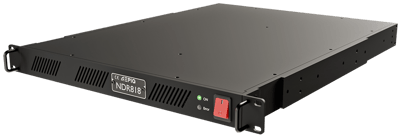
The NDR818 is rack mount 8-channel wideband high performance VITA 49 streaming SDR that converts the HF/VHF/UHF spectrum to digital IF (I/Q or Real) data over 10 Gigabit Ethernet interfaces. It includes 8 independent tuners that cover signals from 2 MHz to 6 GHz with a 40 MHz instantaneous bandwidth. Each channel can tune independently operate phase coherently for applications such as beam forming or direction finding (the unit supports both 4-channel and 8-channel phase coherent operation). To enable geolocation applications, the NDR818 includes an on-board GPS receiver, an external 1PPS input, precision time-tagged digital IF data (formatted based on the VITA 49 standard) and a tunable calibration signal that covers 25 MHz to 6 GHz.
Epiq Datasheet NDR505
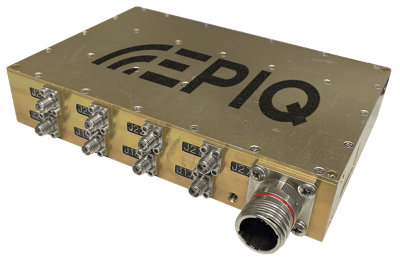
The NDR505 is a compact signal conditioning unit designed to switch different antenna arrays to the inputs of a 4 channel 18 GHz phase coherent software defined radio (SDR) or tuner for applications such as signal identification and direction finding. The unit is compact, rugged, and exhibits extremely clean RF characteristics, making it an ideal partner to Epiq’s highest performing SDRs. It also allows for flexible deployment with two gain settings to compensate for different RF cable lengths.
Epiq - datasheet - Sidekiq™ NVM2
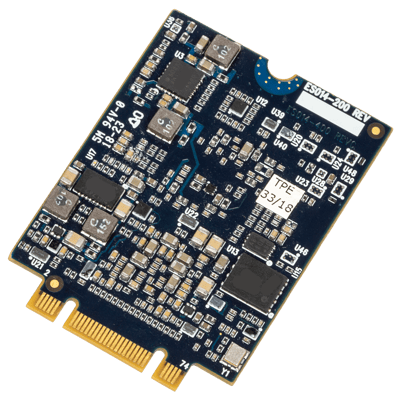
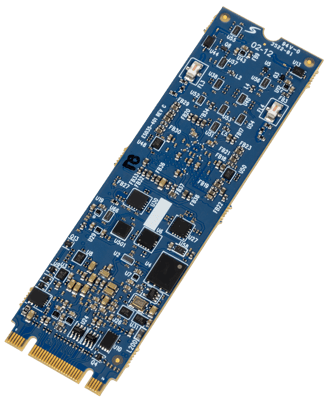
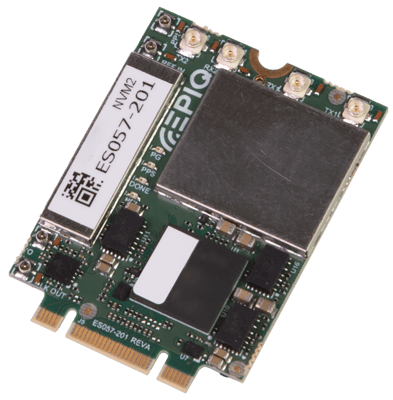
Sidekiq NVM2 is a highly flexible RF powerhouse optimized to tackle your most challenging signal environments. This embeddable SDR-based RF transceiver comes in a tiny M.2 3042 Key B + M form factor that allows it to be used in millions of host devices where PCIe-based NVMe® solid state drives (SSDs) are supported. Sidekiq NVM2 leverages Analog Devices’ ADRV9004, a wideband transceiver RFIC that delivers extended RF tuning capabilities, as well as exceptional RF fidelity and instantaneous dynamic range. Multiple RF operating modes are supported, including SISO, dual band SISO, MIMO, and phase coherent Rx or Tx. The NVM2 is supported by Epiq Solutions' libsidekiq API, enabling rapid customer development.
Epiq - datasheet - Sidekiq™ M.2 and Mini PCIe
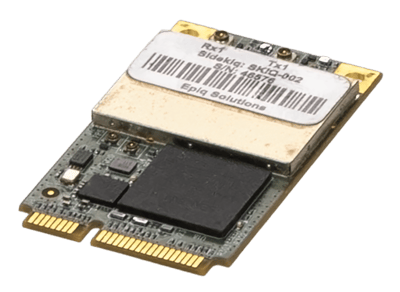
The Sidekiq M.2 and Mini PCIe cards lighten the load when it comes to adding RF to mission critical applications. These embeddable SDR transceiver solutions are ready for integration into systems that support either M.2 or Mini PCIe card form factors and feature RF tuning ranges of 70 MHz to 6 GHz, programmable logic, and typical power consumption of 2.1 watts. Millions of host devices (laptops, tablet computers, embedded computers, etc.) can immediately be transformed into RF processing powerhouses with the addition of a Sidekiq M.2 or Mini PCIe
Epiq - datasheet - Sidekiq™ Z2
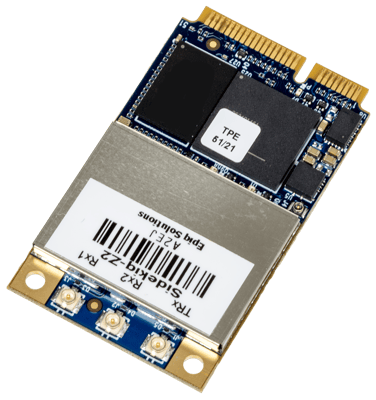
The Sidekiq™ Z2 is the industry’s smallest complete SDR platform, integrating an RF front end, AD9364 RF transceiver, FPGA, and Linux computer into the Mini PCIe form factor. The Z2 makes it easy to add RF capability to your mission. Consuming less than 2W of power and weighing only 8 grams, the Sidekiq Z2 is ideal for SWaP constrained applications such as UAS payloads, remote and portable platforms, embedded tactical communications, and small form factor RF sensing
Epiq - datasheet - Sidekiq™ Stretch
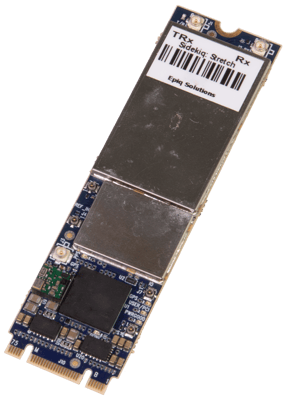
The Sidekiq Stretch is a highly-integrated and highly compatible RF powerhouse in the Sidekiq product family. Packing the hardware that would traditionally require three separate cards into a single, small form factor radio module, the embeddable Stretch uses Analog Devices’ AD9361 RFIC for high performance and flexibility, and adds both a GPS disciplined oscillator (GPSDO) for excellent long-term positioning accuracy and tunable Rx pre-select filtering for optimum interference protection. These and other integrated features create a complete, high performance, low latency, wideband transceiver in an M.2 2280 card. In this form factor, Sidekiq Stretch can be used in millions of host devices where a PCIe-based NVMe® solid state drive (SSD) is supported. Its small size, high compatibility, and high level of performance radically simplifies product development and makes Sidekiq Stretch an ideal choice for use anywhere where low size, weight, and power (SWaP) are critical.
Epiq - datasheet - Sidekiq™ NV100
Sidekiq NV100 is a highly flexible RF powerhouse optimized to tackle your most challenging signal environments. This embeddable SDR-based RF transceiver comes in a tiny M.2 2280 Key B + M form factor that allows it to be used in millions of host devices where PCIe-based NVMe® solid state drives (SSDs) are supported. Sidekiq NV100 leverages Analog Devices’ ADRV9004, a wideband transceiver RFIC that delivers extended RF tuning capabilities, as well as exceptional RF fidelity and instantaneous dynamic range. Multiple RF operating modes are supported, including single channel 1 Rx + 1 Tx FDD/TDD, dual-channel phase coherent Rx or Tx, and dual-channel independently tunable Rx or Tx.
Epiq - datasheet - Sidekiq™ X4
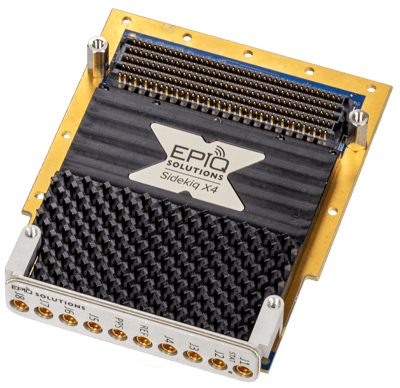
The Sidekiq X4 multi-channel RF transceiver card introduces a new level of RF integration and capability, reducing product development times and improving wideband range, versatility, and performance. Integrating two Analog Devices’ ADRV9009 wideband transceivers, Sidekiq X4 creates a very flexible, high capacity RF transceiver solution that resides in VITA 57.1 FPGA Mezzanine Card (FMC) compliant form factor.
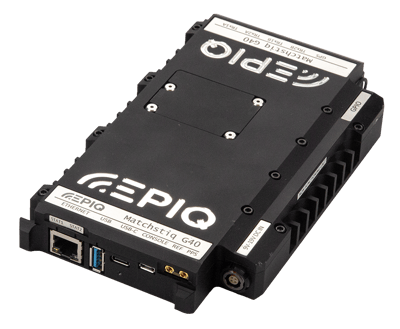
Epiq - datasheet - Matchstiq™ G20 & G40
The Matchstiq™ G20 and G40 are highly flexible RF and signal processing SDR platforms, ready to enable applications with the most challenging SWaP-C requirements. Both the Matchstiq™ G20 and G40 have Epiq's flagship SDR, Sidekiq™ NV100, as a fundamental component. The Matchstiq™ G20 incorporates a single Sidekiq™ NV100, a 2TB SSD, and an Nvidia Orin NX, enabling direct RF record, analysis, and playback. The Matchstiq™ G40 integrates the Orin NX with two Sidekiq's (both NV100), enabling phase-coherent operation across four RF channels, ideal for beamforming applications or independent operation for multi-band applications.
Epiq - datasheet - Skylight™
Skylight is a commercially-available cellular scanning and survey software that provides comprehensive and flexible network analysis. The software decodes cell broadcast messages containing system information and displays a complete picture of your cellular environment to its simple, intuitive user interface or its easily integrated API. The application is designed for efficiency so you can access first results within seconds, perfect for blind surveys and high performance drive tests. When used with a radically small Epiq Solutions’ software-defined radio (SDR), Skylight allows you to see results and make decisions on mobile devices without the need for additional, bulky equipment. Skylight’s API enables remote survey operations, is compatible with widely deployed DoD applications, and can be easily integrated with other systems and applications.
Epiq - datasheet - ERA™
Unsure of what type of signal you are looking for? Or if a signal is present at all? ERA’s fast sweep speeds and advanced triggering capabilities allow you to track faint or short duration signals across time and frequency domains. ERA’s different recording capabilities can save your signal data (either I/Q or visual), capturing spectrum history that shows not only the signals of interest, but also when they occurred. Historical events can be replayed from a file, ensuring forensic capture of even ‘fleeting’ data for rigorous analysis after the event.
Epiq - datasheet - PRiSM™
Go beyond simple smartphone apps to get a detailed view of your cellular environment. PRiSM is a self-contained, lightweight scanner and spectrum analyzer that easily connects to mobile devices to provide real-time, deep insight into coverage, interference and benchmarking. PRiSM brings the power of large, expensive engineering tools to cost-effective handheld devices that can easily be used in the field. With PRiSM, today’s RF specialists get the tool they need to be productive and agile.
Epiq - datasheet - Flying Fox® Enterprise
Epiq Solutions Flying Fox Enterprise is an innovative security solution that accurately detects, identifies, and locates wireless security threats and seamlessly integrates into any organization’s security operations. The system provides always-on, real-time, fully-passive monitoring, geolocation, alerting, recording, and logging of cellular, Bluetooth and Wi-Fi transmissions to support organizations’ compliance with portable electronic device (PED) policies including DoDD 8100.02. Purpose built for the federal enterprise, this web-based system integrates with DoD infrastructure to allow twofactor authentication (2FA), CAC-enabled sign-on, and enterprise-level user management.
Application notes
DeepSIG - Product Overview
Epiq is well known for providing the smallest, high performance software defined radios (SDRs) available, with wide deployment in difficult RF environments. Epiq SDRs marry extremely well with processing engines such as those provided by DeepSig, which utilize artificial intelligence (AI) to enable new levels of signal identification and direction finding capabilities.
DeepSIG DSP vs AI
For as long as adversaries have been using the radio frequency spectrum for communications, there has been a desire by the other side to use them for intelligence gathering. Signal acquisition and processing is evolving rapidly with the advent of ever more powerful edge processing and artificial intelligence (AI). This brief overview compares the latest approaches from Epiq and DeepSig to the conventional approaches they are replacing.
DeepSIG Training & Deployment
One key challenge highlighted by recent global events is the need for rapid adaptability in theater. With signals intelligence (SIGINT) continuing to play a crucial role in most conflicts, adaptability is crucial here, too. Unfortunately identifying new signals and updating platforms accordingly has been painfully slow. This is finally changing with the latest innovations in AI-enabled applications from DeepSig.
DeepSIG Trends
More data has to be better, surely? Modern militaries live and die by the RF signals that they use. Digital radios used in defense are huge beneficiaries of the technology investments being made in civilian 5G wireless, a considerably bigger user of such devices. This is making semiconductor parts available that have digital modulation bandwidths, resolutions and numbers of channels that vastly increase spectrum visibility. This exponential growth in the creation of digitized data is outpacing the ability of processing devices to do anything with the data. Figure 1 illustrates how manpower to analyze data is not scaling at the same rate as the quantity of data, creating a big gap. To add to the pressure, adversary signals are also growing in numbers and complexity.
High Performance SDRs IP3 Specmanship
Third Order Intercept Point (TOI or IP3) is a measure of how well an RF component or system can maintain linearity and performance under strong signal conditions. While it is an important parameter in almost any receiver, it becomes crucial in those designed to handle the weakest signals in the presence of the strongest interferers, such as the high end systems that Epiq designs for. This measurement therefore becomes a parameter that systems such as software defined radios (SDRs) live or die by when suppliers are being selected for military programs. Because the temptations to game the system are so strong, we wanted to put a stake in the ground on how we measure IP3, and why we try to make measurements that will be faithful to real-world use. Note that we’re assuming you, as the reader, are already familiar with how IP3 measurements are made - if not, one of many good tutorials can be found on YouTube here.
High-Performance SDR Architecture and Applications Comparison
A key attribute of Software Defined Radios (SDRs) is their flexibility, which allows them to be applied to a wide range of different applications. The advent of highly integrated System-on-Chip (SoC) semiconductor devices increase the design options available but are only one part of the successful implementation of an SDR to a specific application. This note looks at a couple of defense applications that place very different priorities onto the SDR. One places the biggest emphasis on outright RF performance and throughput. The other prioritizes size, weight, power and cost (SWaP-C) above everything else, enabling RF capabilities to be squeezed onto platforms that have either never been able to fit it on at all, or certainly not with the capabilities now available. In both cases the objective is to provide the end user with as much situational awareness as possible. The two examples are shown in Figure 1. High performance platforms are often airborne, but can also be land or seabased. Low-SWaP platforms can be unmanned systems, man-packs or similar.
High-Performance SDR Design Considerations
A common use-case for the highest performance Software Defined Radios (SDRs) is airborne situational awareness. As the spectrum gets increasingly crowded, and adversaries more capable, the task of examining wide bands, making sense of it all while not missing anything gets harder. As with any engineering challenge, making the right trade-offs is crucial, and this short note looks at some of the relevant ones.
SDR Architecture Comparison
We’ve written elsewhere1 about how UxS (Unmanned Systems) power budgeting is like squeezing a balloon between the required frequency range, RF performance, number of channels and processing, which all have a big impact on power consumption, heat dissipation, and ultimately achievable range. Our business primarily focuses on smaller platforms where the constraints are at their most extreme. We are technology agnostic, but having such a clear focus guides the choices and tradeoffs we make in our designs. This short note describes some of these.
Squeezing the Balloon: Effective SDR Power Budgeting to Maximize UxS Range & Cap
Software Defined Radios (SDRs) are the Swiss army knives of spectrum battlefield situational awareness. Their uses range from satellite communications (SATCOM) and signals intelligence (SIGINT), to direction finding (DF), radar, jamming and many more besides. Even small drones are upgrading capabilities from only visible spectrum cameras to much more advanced capabilities using SDRs.
UAS Trends
Recent conflicts have accelerated trends that were already underway in the Unmanned Aerial System(UAS) market. Figure 1 shows a variety of different attributes that illustrate changes in the military market. The first three relate to differences over time worldwide, with an increasing number of countries able to deploy drones, a predicted 40% increase in spending, and a rapidly growing number of patents being issued as interest in this sector is reflected in innovation (graphs a through c).
UxS Challenges, EPIQ Solutions
Expectations on UxS suppliers to innovate and evolve their platforms quickly, and to ramp to volume faster are getting higher and higher. The addition of spectral monitoring to even small platforms dramatically increases situational awareness, enabled by small and flexible Software Defined Radios (SDRs). For design teams, a frequent issue is the ‘make vs. buy’ decision for the SDR, and whether the project can afford the time or engineering bandwidth to make every piece in-house. As a leading supplier of Small Form Factor (SFF) and open architecture SDRs, Epiq obviously has strong opinions on this topic
UxS Payload Form Factors
Unmanned systems (UxS) come in many shapes and sizes, whether airborne, in the water, or land-based. Most count as SWaP-constrained systems, with care needed in design to properly budget for power, weight and available payload volumes. Other notes in this series have discussed the challenges of power budgeting for SDRs, and RF architectures that optimize SWaP. We often have less choice in the form factors we need to fit into, as these are usually set by the larger system, and the customer question will be “I have this form factor, what can you do in it?”.
Building and Verifying SOSA-Aligned Phase-Coherent RF Systems with Sidekiq X4
What is Phase-Coherent Operation and Why is it Important? At Epiq Solutions, our focus is on developing tools that provide situational awareness and detailed insight into RF environments so you can identify and take action against wireless threats. For these applications, it’s often not good enough to just identify RF signals of interest; we want to know where they’re coming from as well. Ideally, a line of bearing (LOB) can be provided to indicate the direction of an RF signal of interest relative to the receiver. Multiple techniques exist to provide a LOB, and phase-coherent RF reception is a key capability to support this use case.
Which RF Architecture Should I Choose
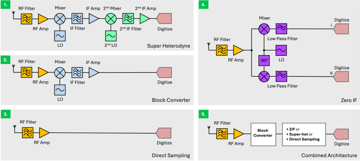
Software Defined Radios (SDRs) have become ubiquitous in applications that value their flexibility, reconfigurability, spectrum agility and upgradability. These include defense, public safety, wireless infrastructure, space, SATCOM, test and measurement to name a few. However, there are several common methods of implementing SDR architectures – how do you know which is best to meet a specific need?
Case studies
How TSC Adapted Epiq’s Matchstiq™ Z3u for an RF-Integrated MOD Payload
Explore how Epiq's Matchstiq™ Z3u enabled SDR-based Mod Payload for deploying advanced SIGINT, EW, and A-PNT applications. Read the case study to learn more about our collaboration with TSC, a high-tech engineering firm serving the U.S. Government, which resulted in a cutting-edge RF Mod Payload solution for USSOCOM.
Enhancing Cybersecurity Through Continuous Wireless Device Detection
Discover how Epiq’s Flying Fox® Enterprise enhances cybersecurity in secure facilities with accurate 24/7 wireless intrusion detection. See its impact on a Department of Defense Joint Base and learn how it helped ensure strict compliance with federal policies against Personal Electronic Devices (PEDs) in sensitive areas.
Providing Real-time Network Insights - Above the Tree Line
PRiSM™ helps Wispr’s customers survey, analyze, and troubleshoot their network in real-time, with three-dimensional accuracy over large areas—leading to improved network performance and better customer experiences for WISPs and private network operators alike.
Guarding State Secrets with Flying Fox® Enterprise
Using Sidekiq™ modules to create Flying Fox® Enterprise, a robust RF-sensing solution, we unlocked a new way to safeguard facilities from unauthorized wireless devices, allow for swift removal of threats, and boost first-line defense.
Powering Next-Gen Direction Finding Through Generative AI
Interested in delving into the synergy of AI and advanced RF sensing solutions? Learn how the integration of Epiq's Sidekiq™ X4 and DeepSig's ML models provided a unique solution for spectrum awareness and RF signal detection, particularly in naval operations.
Reliably Enforcing a No Wireless Policy at a Complex DoD Installation
A DoD installation covering several acres asked us to assess their current, faulty security system. We used Flying Fox® Enterprise to achieve zero false positive coverage of commercial wireless signals, with 30% fewer sensors than they were using before.
Open-source repositories
Blog
Sidekiq Stretch + Intel® NUC: Out-of-the-Box, High-Performance SDR Platform in a Small, Integrated Package
A standard Sidekiq Stretch SDR card combined with a COTS Intel NUC delivers high performance signal processing in a small form factor
Make your RF Field Work Easier: PRiSM the Compact, Agile Powerhouse
Explore PRiSM by Epiq Solutions - a compact, agile RF scanner and analyzer transforming RF field work with seamless integration and robust performance.
Enabling Phase Coherency In Compact RF Systems
While multiple antennas and RF channels allow users to extract significantly more information, this progression has introduced new requirements, including phase coherency.
Enabling the Development of a Long-Range Mesh Network Radio with Sidekiq Z2 Software-Defined Radio (SDR)
Test data retrieval becomes a mission-critical issue in the field. SDRs can enable mesh networks to retrieve mission-critical test data during military applications tests in remote areas.
The Increasing Risk to Energy Substations in the U.S. and the Role of RF Sensing in Security
With the rise of both physical and cyberattacks against the U.S. power grid, there’s a pressing need for more and better security to protect critical infrastructure. Epiq Solutions specializes in ultra-compact software defined radios and RF sensing technology used to monitor and protect some of the most sensitive spaces in the United States.
Software Defined Radio Application Highlight: Smartphone Extension
Combining RF scanning capabilities in one SDR while maintaining 5G connectivity with a smartphone allows users to quickly understand the RF environment around them.
Reducing SDR Complexity
Epiq Solutions has more than a decade of experience developing SDR platforms with a unique approach to reducing SDR complexity for our customers and partners.
Doing More With Less: The Evolution of the World’s Smallest Software-Defined Radio (SDR)
Epiq Solutions’ Sidekiq Z2, the world's smallest SDR, proves it is possible to do more with less. Sidekiq Z2 has shortens time-to-market and simplifies product development so engineers can focus on their applications instead of RF design.
Introducing the Xiphos Q8RF: A Small Form Factor, Radiation Tolerant RFSoC™ Based Platform
The new Xiphos Q8RF is a small form factor radiation tolerant RFSoC™-based platform built for Low-Earth Orbit (LEO) satellites and vehicles
Command and Control is Big Business: Understanding 5G's Impact on Command and Control Military Applications
The DoD is investing in 5G technologies to aid military C2 operations. Examining potential uses of 5G and NextG technology, and how Open RAN can accelerate innovation.
Software Defined Radio Application Highlight: Smartphone Extension
Combining RF scanning capabilities in one SDR while maintaining 5G connectivity with a smartphone allows users to quickly understand the RF environment around them.
SOSA and the Benefits of Software-Defined Radios (SDRs)
SOSA, the standards-based approach to developing mission-critical weapons and defense systems, aims to increase the speed in which we can respond to threats and open new avenues of innovation.
Is it Possible to Have Full ML-Driven Signal Classification & DF Entirely at the RF Edge?
A trial copy of DeepSig’s OmniSIG ships with every G20/G40 and X40.
AI & RF Sensing: Next-Gen Direction Finding Solutions
Learn how Epiq's SDR solutions and machine learning systems can help build advanced RF sensing systems for defense, security, and beyond.
Still Epiq, Always Epiq
Explore Epiq's journey with our CEO: from strategic evolution to our fresh identity and forward-looking vision.
How to Troubleshoot an SDR in 6 Steps
Learn the art of troubleshooting an SDR in 6 steps, from listing possible causes to reviewing results with management. Stick with it for success in solving complex issues.
Three Common Deployments of Wireless Detection
Discover the three common wireless detection challenges and how Flying Fox Enterprise™ assists security professionals in getting smart with their mission to keep secrets secret.
Enabling Phase Coherency In Compact RF Systems
While multiple antennas and RF channels allow users to extract significantly more information, this progression has introduced new requirements, including phase coherency.
Unmasking AirTags: the Power of Flying Fox Enterprise
Explore how Epiq's Flying Fox Enterprise system detects Apple's AirTags within secure spaces, maintaining security amidst tracking technology advancements.
Thunderkiq™ NV100: High Performance SDR in the Palm of Your Hand
The Sidekiq™ NV100 is Epiq Solutions’ latest small form factor SDR, integrating the highest performance RF transceiver into a very small SWaP-C footprint.
Engineering in Quarantine: A Look Back at 2020
2020 was a year to remember. Epiq Solutions looks back on navigating a new world of masks, hand sanitizer, and working from home while managing to grow our business.
Wi-Fi 6, Wi-Fi 6E and Detection
Throughout the last decade, Wi-Fi has undergone some major changes and upgrades. Wi-Fi 6 — or 802.11ax — is the latest iteration of wireless fidelity technology.
Exhibiting Humility at Epiq
Humility is defined as the quality of being humble. As a trait, this means being free from false pride or arrogance — something we're proud to exhibit here at Epiq.
The Sidekiq VPX410 Enables Signals of Interest in X & Ku Bands
Examining signals above 6GHz and SDRs that enable their applications.
Epiq in Orbit: How Our SWaP-Optimized SDR Transceivers are Helping Space Applications
Epiq Solutions’ Sidekiq Mini PCIe is helping companies create smaller, more capable, and more cost-effective satellites.
Network-Centric Wireless Intrusion Detection Needs to Evolve
Learn how wireless intrusion detection systems (WIDS) need to evolve and how Flying Fox® Enterprise™ provides the detection of all wireless threats in secure spaces.
PRiSM CBRS Interference Detection
CBRS is widespread and essential. As problems arise on this spectrum, Epiq’s PRiSM solution is built for even non-RF engineers to navigate and solve network issues.
Reliably Detecting and Locating Cellular Threats
As LTE service creeps into usage by smart products and 5G charges into the crowded RF environment, cellular is now making its way into places we might not expect. This means that no wireless detection plan is truly complete without taking cellular into account.
An Introduction to SOSA
With accelerating momentum around Sensor Open Systems Architecture (SOSA) standards and system requirements, Epiq Solutions’ SOSA standards expert breaks down the fundamentals.
Breaking Through the 6 GHz Ceiling
Both industry and government are taking aim at utilizing the spectrum beyond the 6 GHz threshold which will supercharge connectivity in an array of application areas.
Welcome Back, Tri-Service Open Architecture Interoperability Demonstration (TSOA-ID)
Modular Open Systems Approach (MOSA) is ushering in the next generation of electronic systems for the U.S. Department of Defense (DoD).
Epiq Solutions Teams With Safer Buildings Coalition to Help First Responders Save Lives
Epiq Solutions has joined the Safer Buildings Coalition to enhance the communication capabilities of first responders and occupants in buildings across the U.S.
The Next Generation of Wireless Situational Awareness
FlyingFox was developed in conjunction with the U. S. Naval Research Laboratory and provides full spectrum insight to detect and locate Wi-Fi, Bluetooth, and cellular signals.
A New Frontier for Software Defined Radios: Space
With the accelerating deployment of low earth orbit (LEO) satellites, there is an emerging opportunity for SDRs to migrate to the space domain and provide configurable radio capability in a new frontier.
Epiq Solutions Discusses The Neptune RF Payload for Unmanned Maritime Systems Partnership with The Defense Tech Podcast
Interviewed by “Civilian Sydney” Marsman, on the Defense Tech Podcast.
Managing Our Supply Chain in Challenging Times
Supply chain shortages are hitting electronics components particularly hard. Read this post for tips on how to manage in these challenging times.
Accelerating In-Building Public Safety Wireless Testing With PRiSM and iBwave Mobile Survey
PRiSM by Epiq Solutions integrated with iBwave Mobile Survey means accelerating the survey phase. Read on to learn more about this versatile mobile survey application.
Hiding in Plain Sight: The Security Risks of Pervasive IoT Devices
Overcoming the compliance challenges and technical obstacles needed to secure government spaces from unauthorized PEDs requires flexible, full-spectrum wireless detection.
Introducing Sidekiq™ NV800: SDR for Advanced RF Spectrum Applications
Discover Sidekiq™ NV800: with eight high-performance RF receivers, this SDR is ideal for applications in challenging signal environments. Dive in now!
Epiq Solutions VPX400 Demonstrates MORA 2.4 Compliance
Epiq’s focused RF SDR has met MORA 2.4 and SOSA C4SIR guidelines. Read here for more.
Key Considerations When Planning a Wireless Detection System
Learn about the key considerations and how Flying Fox™ Enterprise™ assists security professionals in getting smart with their mission to keep secrets secret.
New RF Transceivers from Analog Devices Bring Big Benefits to Military and Defense Applications
Analog Devices’ New ADRV9002 brings new levels of RF performance and flexibility, while continuing to maintain aggressively low power consumption and minimal size.
The Increasing Risk to Energy Substations in the U.S. and the Role of RF Sensing in Security
With the rise of both physical and cyberattacks against the U.S. power grid, there’s a pressing need for more and better security to protect critical infrastructure. Epiq Solutions specializes in ultra-compact software defined radios and RF sensing technology used to monitor and protect some of the most sensitive spaces in the United States.
A New Frontier for Software Defined Radios: Space
With accelerating deployment of low earth orbit (LEO) satellites, there is an emerging opportunity for SDRs to migrate to the space domain and provide configurable radio capability in a new frontier.
Project Planning Is a Contact Sport, Do It Anyway
How we navigate the chaos wreaked by supply chain interruptions and changing customer requirements is not with a crystal ball but with a quarterly project planning process we affectionately refer to as 'Cage Match.'
Introducing Sidekiq™ NVM2: Small Form Factor MIMO SDR
Discover the Sidekiq™ NVM2, Epiq Solutions' latest compact MIMO SDR, offering RF flexibility and low SWaP for various applications. Explore its features and potential in the RF spectrum landscape.
Thunderkiq™-NV100: High Performance SDR in the Palm of Your Hand
The Sidekiq™ NV100 is Epiq Solutions’ latest small form factor SDR, integrating the highest performance RF transceiver into a very small SWaP-C footprint.
When a Work-Trip Isn’t a Work-Trip at all: Four Days of Sun with Epiq Solutions
The entire Epiq Solutions team enjoyed four days of complimentary vacation in sunny Marco Island, Florida. No agendas, no project meetings - just a celebration of success.
Welcoming CyberRadio Solutions to Team Epiq
Epiq is welcoming CyberRadio to our team! This acquisition is all about expanding our portfolio to support you in missions across maritime, land, air, and space domains.
2021: The Year of SOSA Conformance
We look at the benefits SOSA-conformance promises and how working toward compliance can help vendors ensure their products are ready for the new standard.
Simplifying In-Building Wireless Survey
In-building wireless survey solutions can either waste or save you time. Read here for how Epiq gets you time back on your survey phase.
The Art and Science of Product Management at Epiq Solutions
Global businesses launch 30,000 new products every year, and 95% of them fail. With that daunting statistic in mind, we work hard every day to serve our customers with the right products, at the right time.
Small Form Factor Dual Channel SDR Enables New Applications
Examining how dual channel implementation — the ability to receive and transmit across two frequencies at once — benefits a variety of radio applications.
SDR Trends Seminar, Huntsville AL
Our in-person event last week. A huge thank you also to our partners DeepSig, Sciens Innovations and Alaris Antennas for supporting the event.
Small Size, Big Impact: How Tiny SDRs Are Enabling New Applications
Discover how tiny SDRs bridge the gap between hardware and software to deliver powerful results across a wide range of industries in our recent blog post.
Honoring Excellence: Aaron Foster Selected as a 2025 Cyber Distinguished Member of the U.S. Army Corps
Epiq Examples Video Series #1 - Using GNU Radio to Decode a Simple UAV Video Stream With Epiq’s Thunderkiq NV100
Aaron Foster Video Series #1 - Using GNU Radio to Decode a Simple UAV Video Stream With Epiq’s Thunderkiq NV100
Epiq Examples Video Series #2 - Installing Libsidekiq SDR API on a Raspberry Pi 5 to Enable Epiq’s Sidekiq NVM2
Aaron Foster Video Series #2 - Installing Libsidekiq SDR API on a Raspberry Pi 5 to Enable Epiq’s Sidekiq NVM2
RF I/O for SOSA-Aligned Systems
Developing SOSA-aligned systems presents an interesting set of challenges for RF design, from how signals enter and exit the transceiver to how they are distributed in accordance with the standard.
Accelerating AI/ML Signal Processing: Epiq’s New Partnership with DeepSig
Accelerate AI and ML signal processing with Epiq's partnership with DeepSig, integrating advanced technology into SDRs for next-gen RF missions and evolving RF landscapes.
Epiq Solutions Paves the Way for AI/ML Integration in RF Spectrum Analysis
Meet Epiq's Matchstiq™ X40 & G40 which are set to revolutionize AI/ML at the RF Edge. Explore more in the blog post.
Software Defined Radios – Which RF Architecture Should I Choose?
Choosing the right RF architecture is critical for SDR performance. From Superheterodyne to Direct Sampling, each offers unique trade-offs in size, power, and capability. Discover which architecture best fits your mission needs—register now to access the full article.
Videos
User Manuals
Sidekiq_Z2_Hardware_Users_Manual_v1.1
Sidekiq Z2 is a small form factor software defined radio card that provides a wideband RF transceiver plus a Linux computer in a standard MiniPCIe card module measuring 30mm x 51mm x 5mm. With the integrated Linux computer, Sidekiq Z2 is targeted for applications where the necessary signal/protocol processing tasks can execute directly on the card itself, without the necessity of a host computer platform.
Sidekiq_Z2_Hardware_Users_Manual_v1.1
A Sidekiq system consists of a Sidekiq miniPCIe, m.2, or FMC card inserted into a Linux or Windows host platform supporting the Sidekiq form factor. Additionally, the Sidekiq Z2 consists of a Zynq 7010, which is a self contained embedded ARM processor running Linux and Xilinx FPGA in the mPCIe form factor. The Matchstiq Z3u is a fully housed software defined radio consisting of the Zynq Ultrascale+, running Linux and Xilinx FPGA, a wideband transceiver, and an integrated GPS.
Sidekiq_FPGA_Developers_Manual (v3.15.1)
The Sidekiq PDK provides a complete FPGA reference design that enables a user to quickly and efficiently create custom applications targeting Sidekiq MiniPCIe with a Xilinx Spartan®-6 LX45T, Sidekiq M.2 with a Xilinx Artix®-7 XC7A50T, or Sidkiq M.2 Stretch with a Xilinx Artix®-7 XC7A50T FPGA. On Sidekiq MiniPCIe and Sidekiq M.2, both PCIe and USB data transport modes are supported with separate FPGA reference designs.
Sidekiq_X2_X4_FPGA_Developers_Manual (3.17.1, Jan 27, 2023)
The SidekiqTM X2 or the SidekiqTM X4 PDK provides a complete FPGA reference design that enables a user to quickly and efficiently create custom applications targeting SidekiqX2 or SidekiqX4 installed a compatible ThunderboltTM 3 chassis hosting a Xilinx® Kintex® UltrascaleTM family FPGA. The supported carriers and devices are listed in Table 3.1 of Section 3.1.
Sidekiq_Z2_FPGA_Developers_Manual-1 (3.16.2, 03/10/22)
The Sidekiq and Matchstiq Platform Development Kit (PDK) provides the ability for users to create their own custom applications. This can be accomplished by customizing software or the RTL code that configures the FPGA. This manual gives an overview of the FPGA reference design, with the intention of empowering the user to build upon the design to create custom applications.
Epiq-Solutions-Sidekiq-Mini-Pcie-Hardware-User-Manual (v1.4, Dec 03, 2021)
Sidekiq is a miniature software defined radio card in a MiniPCIe form factor, providing a flexible wideband RF transceiver that can be used by a host system. The features of the platform include the following: RF transceiver covering 70 MHz to 6 GHz, with independent Tx and Rx frequencies Supports RF channel bandwidths up to 50 MHz A/D and D/A quadrature sample rates from 200 Ksamples/sec up to 61.44 Msamples/sec, with 12-bit precision User programmable FPGA for signal processing applications (Xilinx Spartan 6 LX45-T, part # XC6SLX45T-3CSG324I)
Epiq-Solutions-Sidekiq-X4-Hardware-User-Manual (v1.4, April 07, 2022)
Sidekiq X4 is a high performance multi-channel RF transceiver card providing a complete “antennato-bits” solution in a VITA 57.1 FPGA mezzanine card (FMC) form factor. Sidekiq X4 leverages two Analog Devices' ADRV9009 wideband transceiver RFICs [4] to provide the core functionality of the card. The capability of the card is further enhanced with on-board circuitry to extend the RF tuning range, provide RF pre-select filtering on the RF receivers, support external synchronization inputs, and other features only found on Sidekiq X4.
Epiq-Solutions-Sidekiq-Stretch-Hardware-User-Manual (v1.2, Feb 11, 2022)
Sidekiq Stretch is a miniature software defined radio card in a M.2 2280 card form factor, providing a flexible wideband RF transceiver that can be used by a host system. The 2280 M.2 form factor is widely used for PCIe-based NVMe® solid state drives (SSDs) in commercial laptops, embedded systems and servers. The features of the Sidekiq Stretch include the following
Epiq-Solutions-Sidekiq-Nv100-Hardware-User-Manual (v1.4, May 25, 2022)
Sidekiq NV100 is a miniature software defined radio card in a M.2 2280 card form factor, providing a flexible wideband RF transceiver that can be used by a host system. The M.2 2280 form factor is widely used for PCIe-based NVMe® solid state drives (SSDs) in commercial laptops, embedded systems and servers. The features of the Sidekiq NV100 include the following:
Epiq-Solutions-Sidekiq-M2-Hardware-User-Manual (v1.5, Nov 10th, 2021)
Sidekiq M.2 is a miniature software defined radio card in a 3042 M.2 card form factor, providing a flexible wideband RF transceiver that can be used by a host system. The M.2 form factor is being adopted as the standard add-on card form factor for commercial tablets and laptops, where physical volume is aggressively being minimized. The features of the platform include the following:
Epiq-Solutions-Sidekiq-Z2-Hardware-User-Manual (v1.7, Sept 02, 2021)
Sidekiq Z2 is a small form factor software defined radio card that provides a wideband RF transceiver plus a Linux computer in a standard MiniPCIe card module measuring 30mm x 51mm x 5mm. With the integrated Linux computer, Sidekiq Z2 is targeted for applications where the necessary signal/protocol processing tasks can execute directly on the card itself, without the necessity of a host computer platform. Simple carrier cards can be developed for Sidekiq Z2 to customize the I/O available in the system. Alternately, Sidekiq Z2 can be integrated in to any host system with a full size MiniPCIe slot, where supplemental processing could take place on the host system if needed.
Epiq-Solutions-Sidekiq-X4-Integration-Manual (v1.2, March 03, 2022)
Sidekiq X4 is a high performance multi-channel RF transceiver card providing a complete “antennato-bits” solution in a VITA 57.1 FPGA mezzanine card (FMC) form factor. Sidekiq X4 leverages two Analog Devices' ADRV9009 wideband transceiver RFICs [4] to provide the core functionality of the card. The capability of the card is further enhanced with on-board circuitry to provide RF pre-select filtering on the RF receivers, support external synchronization inputs, and other features only found on Sidekiq X4. The key highlights of Sidekiq X4 are enumerated below:
Epiq-Solutions-Sidekiq-X4-Getting-Started-Guide (Draft, Jan 19, 2020)
The Sidekiq X4 PCIe Blade includes a Global Navigation Satellite System (GNSS) add-on card which is based on a uBlox LEA-M8F GNSS module www.u-blox.com/en/product/lea-m8f-module . The GPS module is capable of using GNSS (9BeiDou, GLONASS, GPS/QZSS), external 10 MHz frequency sources, and an internal VCTCXO as its disciplining source.
Epiq-Solutions-Matchstiq-Z3u-Getting-Started-Guide (V1.0.0, Feb 04, 2021)
The Matchstiq Z3u can be powered up via either the USB3 interface or the 7-17VDC input. The Matchstiq Z3u can be used by either running Sidekiq applications on a host system and running in a standalone system running Sidekiq applications directly on the Z3u.
Sidekiq_X2_X4_Getting_Started_Guide
The Sidekiq X2 / X4 PDK includes either a Sidekiq X2 or X4 FMC card mounted on an FPGA carrier card and PCIe Gen3 x4 interface all hosted in a Thunderbolt™ 3 (TB3) PCIe carrier card chassis. The chassis connects to a TB3 enabled Linux laptop via the included TB3 cable. A USB cable is also included to connect the laptop with the GPS USB port to provide GPS configuration and raw data. The PDK laptop is pre-loaded with Epiq Solutions’ libsidekiq API, test applications, ERA (Spectrum Analyzer), and device drivers.
Sidekiq-Z2-Getting-Started-Guide (v1.0)
The world's smallest wideband RF transceiver + Linux computer module. Each Sidekiq Z2 unit is fully tested by Epiq Solutions before shipment, and is guaranteed to be functional at the time it is received by the customer. Improper handling and use of Sidekiq Z2 can cause the card to become nonfunctional. In particular, the following list of actions are known to cause damage to Sidekiq Z2's hardware:
Epiq-Solutions-Matchstiq-Z3u-Hardware-User-Manual (v1.6, Oct 13, 2022)
Matchstiq Z3u is a small form factor software defined radio system that provides a wideband RF transceiver plus a Linux computer. With the integrated Linux computer, Matchstiq Z3u is targeted for applications where the necessary signal/protocol processing tasks can execute standalone, without the necessity of a host computer platform. Alternately, Matchstiq Z3u can be interfaced with a host system (PC running Linux / Windows / MacOS or Android device), where supplemental processing and control of the Matchstiq Z3u could take place on the host system. Whether running in a standalone configuration or with a host device, all configuration and streaming of the Matchstiq Z3u is completed within the libsidekiq software API.
Epiq-Solutions-Flying-Fox-User-Manual (v1.11.0, Sep 15, 2023)
Minimally, a Flying Fox Enterprise Deployment is made up of Flying Fox Sensors, one or more PoE+ switches and/or injectors, the Flying Fox Enterprise Appliance, and client computers. The Flying Fox Enterprise application is a web-based application that is served by the on-premise Flying Fox Enterprise Appliance and is accessed by browsers in client computers.
Epiq-Solutions-Flying-Fox-Deployable-Kit
Epiq Solutions’ Flying Fox Enterprise - Deployable is the portable version of the innovative security appliance that seamlessly integrates into any department or agency’s threat management operations. Flying Fox Enterprise Deployable provides real-time, passive detection, identification and location of nearby cellular, Bluetooth®, BLE and Wi-Fi® devices, and is in compliance with U.S. Government directives including U.S. Army AR 380-28 and DoD 8100.02.
Epiq-Solutions-Flying-Fox-Deployable-Kit-Getting-Started-Guide
The Flying Fox Enterprise Deployable kit is designed to detect, identify and locate emissions within the perimeter of a monitored area. For optimal location accuracy, Flying Fox sensors should be placed near the the perimeter of the area to be monitored. A four sensor kit can be used to cover areas up to 6000 sq. ft. depending on the shape of the area to be monitored, building construction, and obstacles.
Flying-Fox-Quick-Start-Guide
Flying Fox sensors locate emissions INSIDE the perimeter of a monitored area. For optimal sensing, Flying Fox sensors should be placed near the four corners OUTSIDE the perimeter of the area to be monitored (but see diagrams below). Maximum recommended spacing is 40 feet apart for optimum geolocation; minimum spacing is five (5) feet apart. Placing sensors closer together increases geolocation accuracy, but spacing must not be closer than five feet.
Epiq-Solutions-Era-User-Manual (v14.0, April 16, 2020)
ERA is officially supported on Ubuntu 14.04 and 16.04. ERA is untested on other Linux distributions. For best recording results, use an ext3 or ext4 filesystem. This guide assumes that you already have an ERA installer software package for the target platform in your possession; if that is not the case, please contact Epiq Solutions.
Epiq-Solutions-Prism-User-Manual (v2.0.0, Oct 26, 2022)
PRiSM converts mobile devices into a 5G, 4G, and P25 network survey, scanning, testing, and troubleshooting scanner and spectrum analyzer. The PRiSM scanner can be connected to a compatible laptop, tablet, or smartphone with no apps to download.
Epiq-Solutions-Prism-Getting-Started-Guide (v1.03, Mar 15, 2022)
PRiSM converts mobile devices into a 5G, 4G, and P25 network survey, scanning, testing, and troubleshooting scanner and spectrum analyzer. The PRiSM scanner can be connected to a compatible laptop, tablet, or smartphone with no apps to download.