
.webp?length=400&name=Cyber-Radio-NDR585%20(3).webp)

.webp?width=70&height=70&name=Vector%20(1).webp)


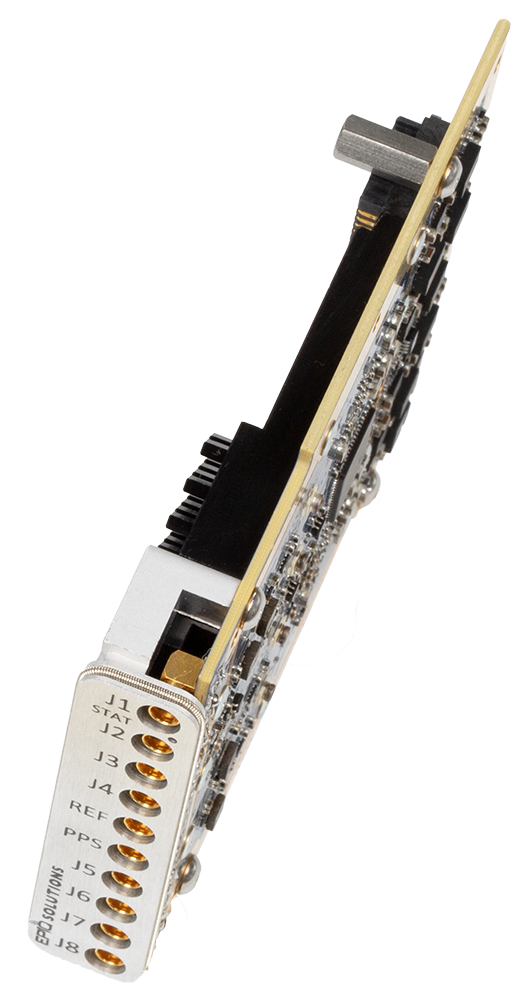
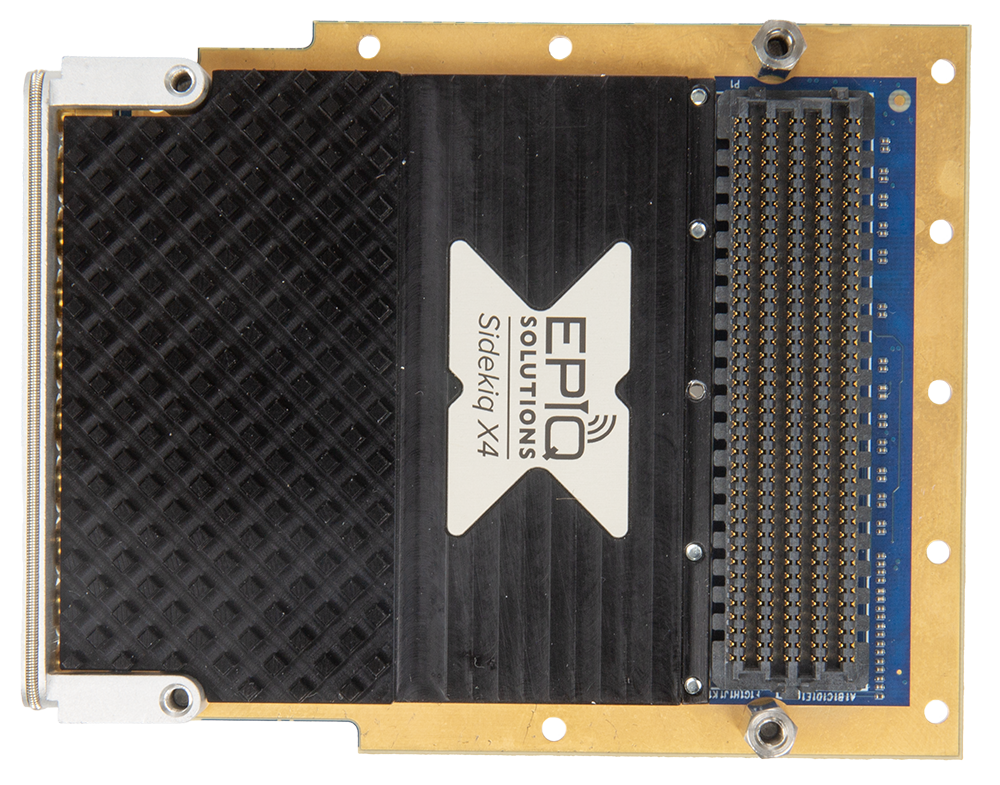
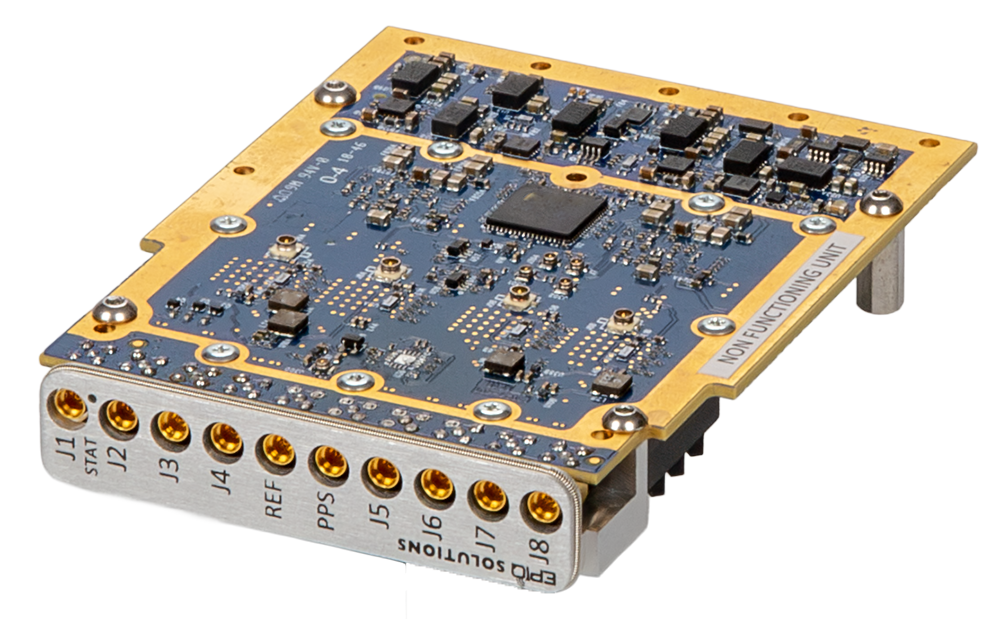





compared spec

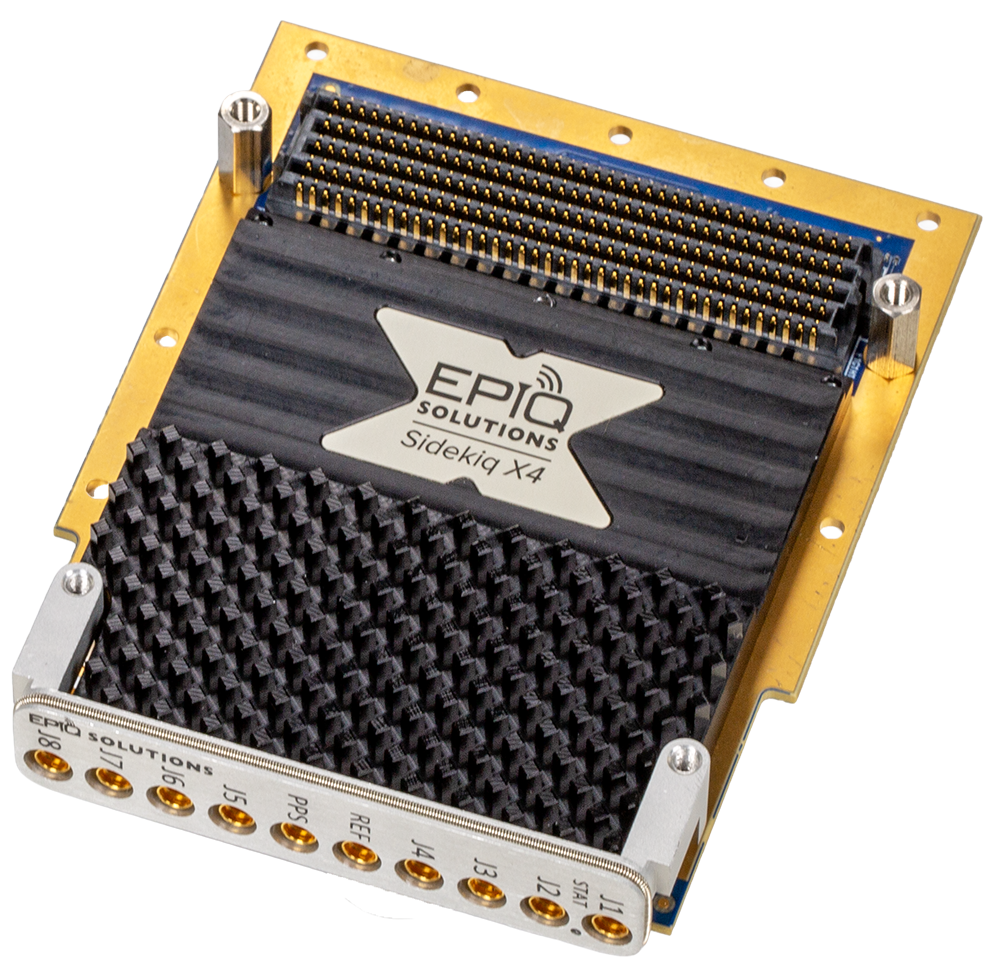
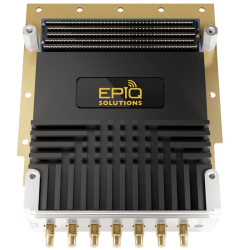
Sidekiq™ X4
Sidekiq™ X2
compared spec

Sidekiq™ X4
TUNING RANGE
75 MHz to 6 GHz, able to capture down to 1 MHz
Bandwidth
Up to 450 MHz per channel
Power Consumption
7-14 Watts (typical usage)
INTEGRATED FPGA
/
FORM FACTOR
VITA 57.1 High Pin Count FPGA Mezzanine Card
I/O
JESD204b
RECEIVERS
Up to 4
TRANSMITTERS
Up to 4

Sidekiq™ X2
TUNING RANGE
1 MHz to 6 GHz
BANDWIDTH
Up to 100 MHz per channel
POWER CONSUMPTION
4-10 Watts (depending on the number of channels in use)
INTEGRATED FPGA
/
FORM FACTOR
VITA 57.1 High Pin Count FPGA Mezzanine Card
I/O
JESD204b
RECEIVERS
Up to 3
TRANSMITTERS
Up to 2
Resources
Datasheets
Epiq - datasheet - Sidekiq™ X4
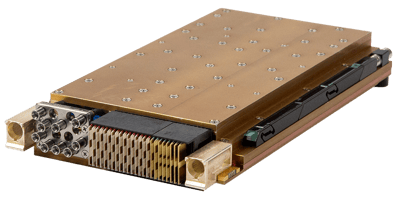
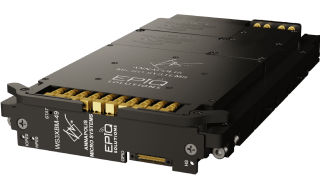
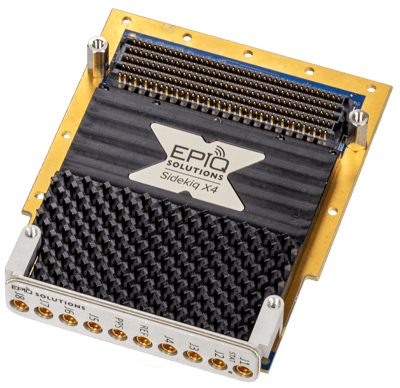
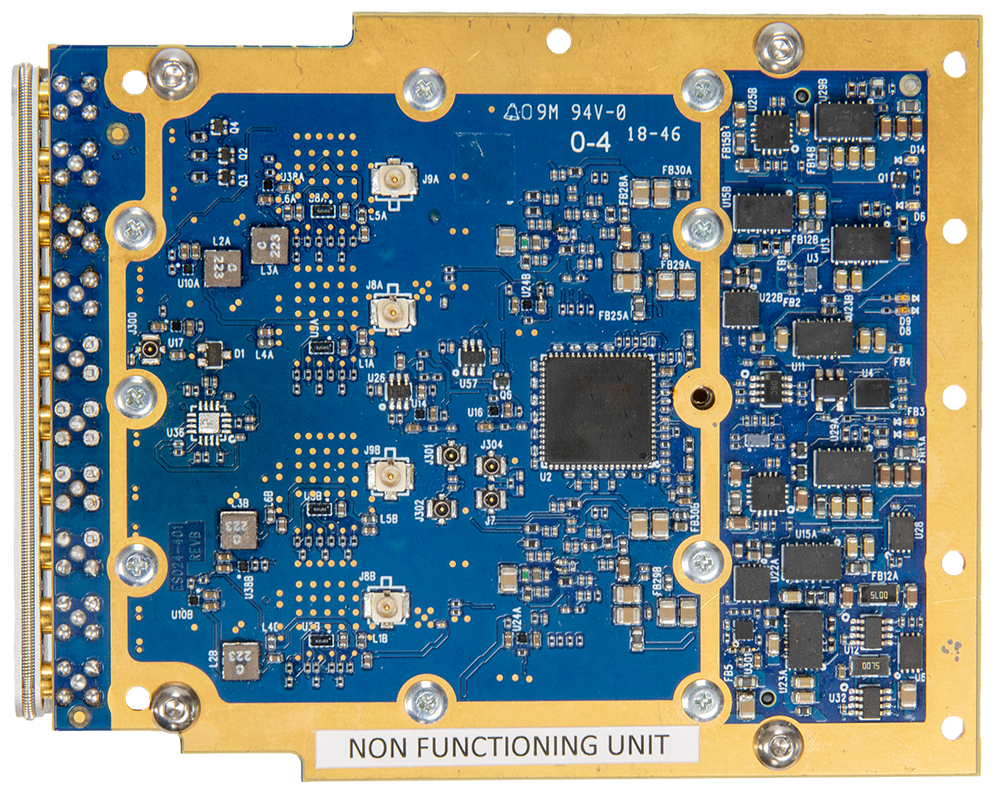
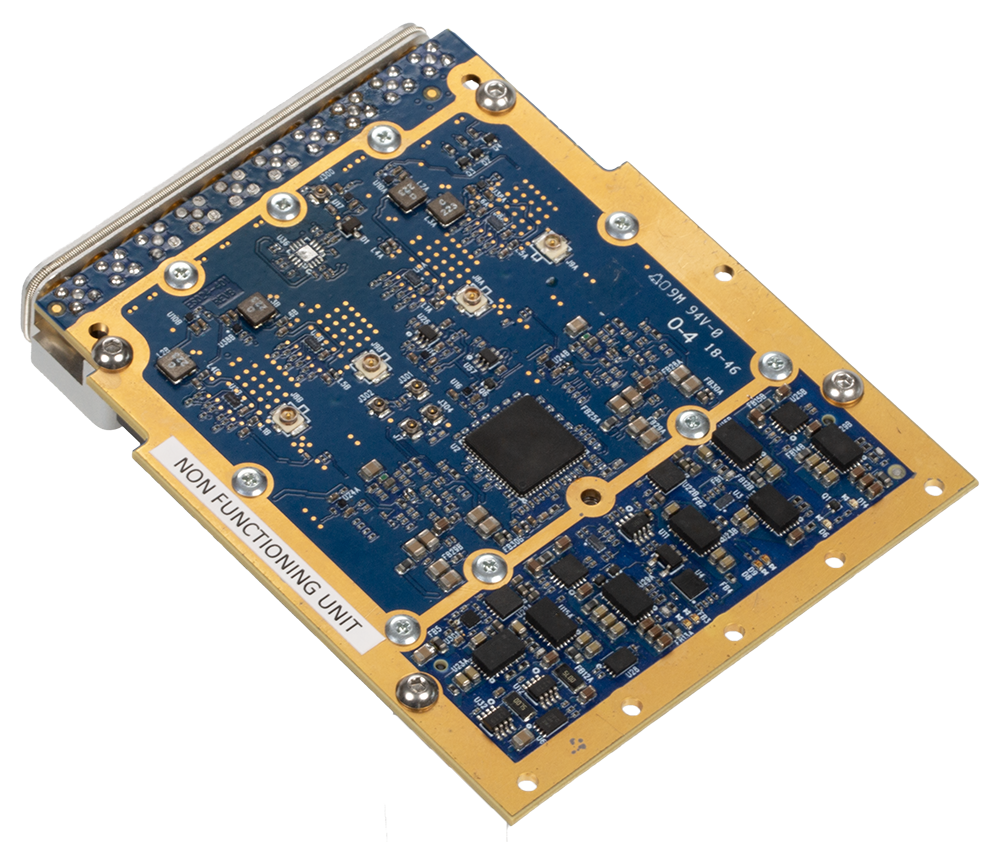
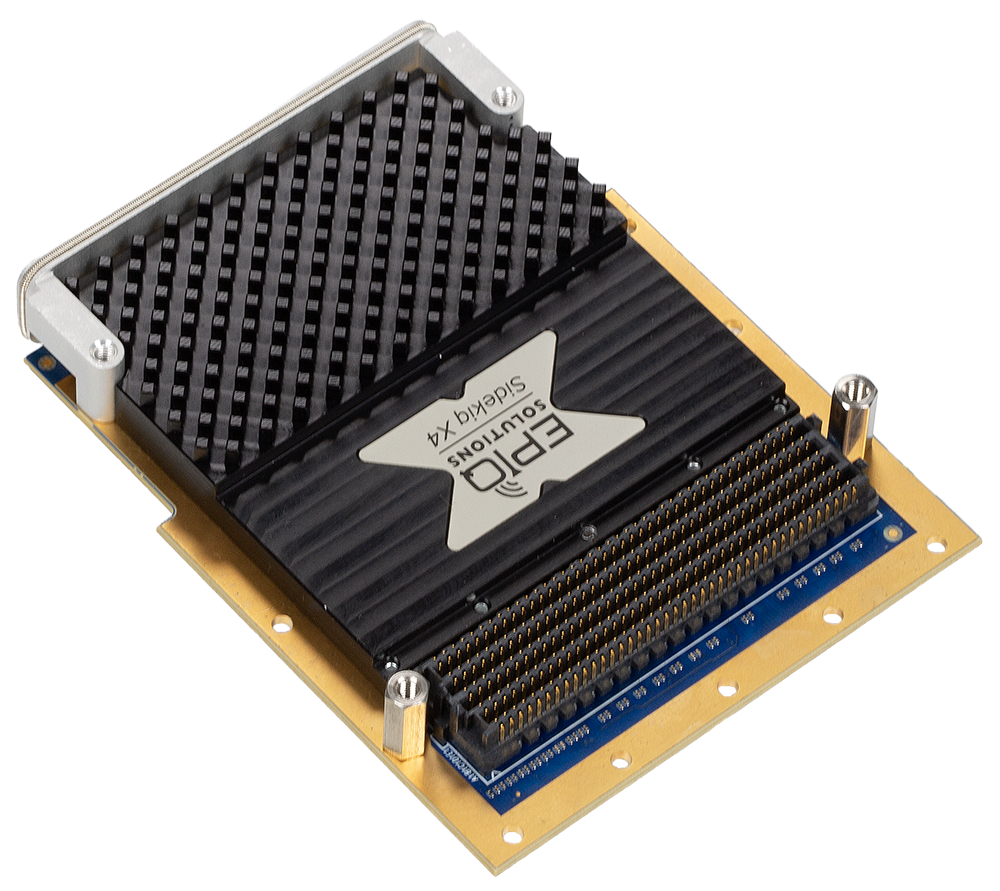
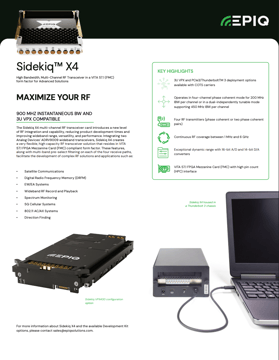
The Sidekiq X4 multi-channel RF transceiver card introduces a new level of RF integration and capability, reducing product development times and improving wideband range, versatility, and performance. Integrating two Analog Devices’ ADRV9009 wideband transceivers, Sidekiq X4 creates a very flexible, high capacity RF transceiver solution that resides in VITA 57.1 FPGA Mezzanine Card (FMC) compliant form factor.
Application notes
Squeezing the Balloon: Effective SDR Power Budgeting to Maximize UxS Range & Cap
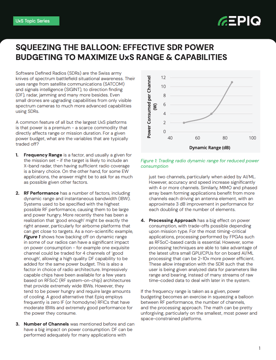
Software Defined Radios (SDRs) are the Swiss army knives of spectrum battlefield situational awareness. Their uses range from satellite communications (SATCOM) and signals intelligence (SIGINT), to direction finding (DF), radar, jamming and many more besides. Even small drones are upgrading capabilities from only visible spectrum cameras to much more advanced capabilities using SDRs.
UAS Trends
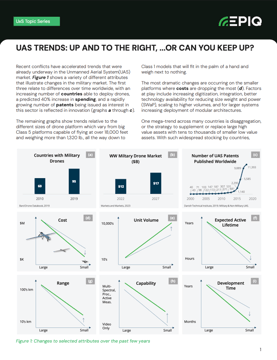
Recent conflicts have accelerated trends that were already underway in the Unmanned Aerial System(UAS) market. Figure 1 shows a variety of different attributes that illustrate changes in the military market. The first three relate to differences over time worldwide, with an increasing number of countries able to deploy drones, a predicted 40% increase in spending, and a rapidly growing number of patents being issued as interest in this sector is reflected in innovation (graphs a through c).
UxS Challenges, EPIQ Solutions
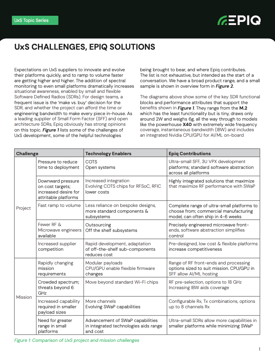
Expectations on UxS suppliers to innovate and evolve their platforms quickly, and to ramp to volume faster are getting higher and higher. The addition of spectral monitoring to even small platforms dramatically increases situational awareness, enabled by small and flexible Software Defined Radios (SDRs). For design teams, a frequent issue is the ‘make vs. buy’ decision for the SDR, and whether the project can afford the time or engineering bandwidth to make every piece in-house. As a leading supplier of Small Form Factor (SFF) and open architecture SDRs, Epiq obviously has strong opinions on this topic
UxS Payload Form Factors
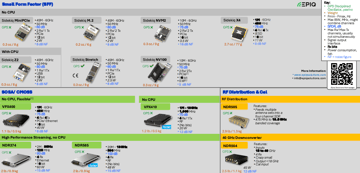
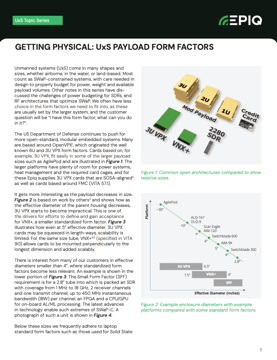
Unmanned systems (UxS) come in many shapes and sizes, whether airborne, in the water, or land-based. Most count as SWaP-constrained systems, with care needed in design to properly budget for power, weight and available payload volumes. Other notes in this series have discussed the challenges of power budgeting for SDRs, and RF architectures that optimize SWaP. We often have less choice in the form factors we need to fit into, as these are usually set by the larger system, and the customer question will be “I have this form factor, what can you do in it?”.

Building and Verifying SOSA-Aligned Phase-Coherent RF Systems
What is Phase-Coherent Operation and Why is it Important? At Epiq Solutions, our focus is on developing tools that provide situational awareness and detailed insight into RF environments so you can identify and take action against wireless threats. For these applications, it’s often not good enough to just identify RF signals of interest; we want to know where they’re coming from as well. Ideally, a line of bearing (LOB) can be provided to indicate the direction of an RF signal of interest relative to the receiver. Multiple techniques exist to provide a LOB, and phase-coherent RF reception is a key capability to support this use case.
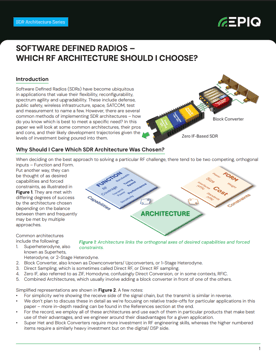
Which RF Architecture Should I Choose
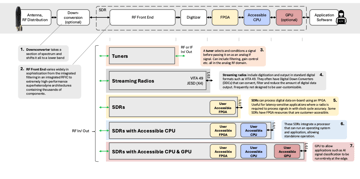
Software Defined Radios (SDRs) have become ubiquitous in applications that value their flexibility, reconfigurability, spectrum agility and upgradability. These include defense, public safety, wireless infrastructure, space, SATCOM, test and measurement to name a few. However, there are several common methods of implementing SDR architectures – how do you know which is best to meet a specific need?

Will it blend? Finding the Right Host Computer for an Embedded SDR
When developing an RF-based product, SDR selection is important. It rightfully gets a lot of attention – RF performance, number of receiver/transmitter channels, size, power consumption, and security are just a few of the considerations – but selecting the appropriate compute platform deserves equal (if not more) consideration to ensure the success of a product

Considerations in the Build vs Buy Decision-Making Process for SDRs
The flexibility and enhanced performance offered by software-defined radios (SDRs) in RF transceiver applications is driving an increased demand for their use across many industries such as defense, telecom, aerospace, and government.
Case studies
Open-source repositories

Blog

SOSA and the Benefits of Software-Defined Radios (SDRs)
SOSA, the standards-based approach to developing mission-critical weapons and defense systems, aims to increase the speed in which we can respond to threats and open new avenues of innovation.
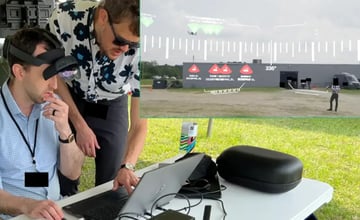
AI & RF Sensing: Next-Gen Direction Finding Solutions
Learn how Epiq's SDR solutions and machine learning systems can help build advanced RF sensing systems for defense, security, and beyond.
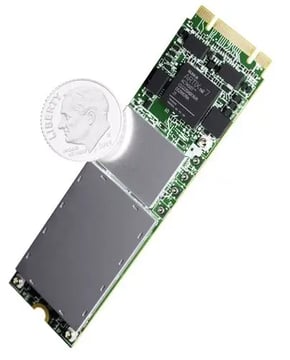
Enabling Phase Coherency In Compact RF Systems
While multiple antennas and RF channels allow users to extract significantly more information, this progression has introduced new requirements, including phase coherency.

Breaking Through the 6 GHz Ceiling
Both industry and government are taking aim at utilizing the spectrum beyond the 6 GHz threshold which will supercharge connectivity in an array of application areas.

RF I/O for SOSA-Aligned Systems
Developing SOSA-aligned systems presents an interesting set of challenges for RF design, from how signals enter and exit the transceiver to how they are distributed in accordance with the standard.
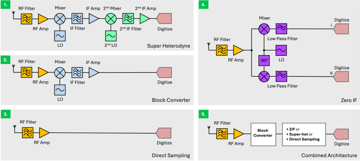
Software Defined Radios – Which RF Architecture Should I Choose?
Choosing the right RF architecture is critical for SDR performance. From Superheterodyne to Direct Sampling, each offers unique trade-offs in size, power, and capability. Discover which architecture best fits your mission needs—register now to access the full article.
User Manuals
Epiq Sidekiq API
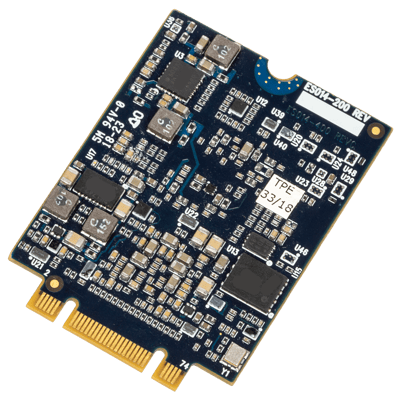
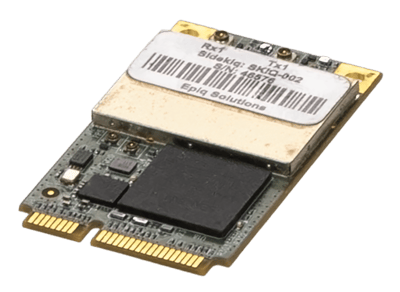
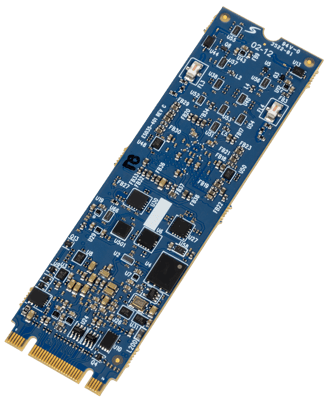
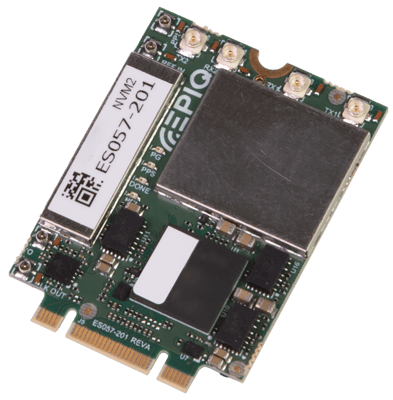
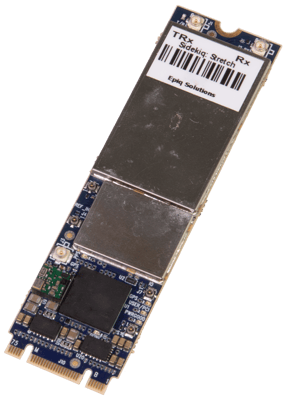
Sidekiq is a software defined radio card in a MiniPCIe, M.2 (3042 and 2280), or VITA 57.1 FPGA Mezzanine Card (FMC) form factor (Sidekiq X2 and X4).
Sidekiq Software Development Manual
This document provides the details required to enable a software developer to develop Linux software applications that will utilize the Sidekiq SDR.
Sidekiq X2 X4 FPGA Developers Manual
The SidekiqTM X2 or the SidekiqTM X4 PDK provides a complete FPGA reference design that enables a user to quickly and efficiently create custom applications targeting SidekiqX2 or SidekiqX4 installed a compatible ThunderboltTM 3 chassis hosting a Xilinx® Kintex® UltrascaleTM family FPGA. The supported carriers and devices are listed in Table 3.1 of Section 3.1.
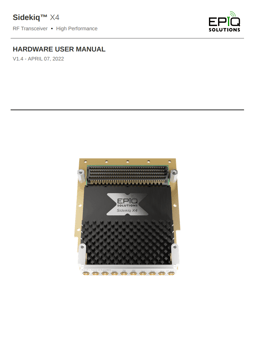
Epiq Solutions Sidekiq X4 Hardware User Manual
Sidekiq X4 is a high performance multi-channel RF transceiver card providing a complete “antennato-bits” solution in a VITA 57.1 FPGA mezzanine card (FMC) form factor. Sidekiq X4 leverages two Analog Devices' ADRV9009 wideband transceiver RFICs [4] to provide the core functionality of the card. The capability of the card is further enhanced with on-board circuitry to extend the RF tuning range, provide RF pre-select filtering on the RF receivers, support external synchronization inputs, and other features only found on Sidekiq X4.
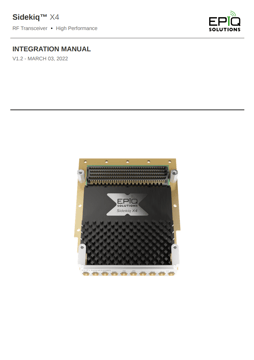
Epiq Solutions Sidekiq X4 Integration Manual
Sidekiq X4 is a high performance multi-channel RF transceiver card providing a complete “antennato-bits” solution in a VITA 57.1 FPGA mezzanine card (FMC) form factor. Sidekiq X4 leverages two Analog Devices' ADRV9009 wideband transceiver RFICs [4] to provide the core functionality of the card. The capability of the card is further enhanced with on-board circuitry to provide RF pre-select filtering on the RF receivers, support external synchronization inputs, and other features only found on Sidekiq X4. The key highlights of Sidekiq X4 are enumerated below:
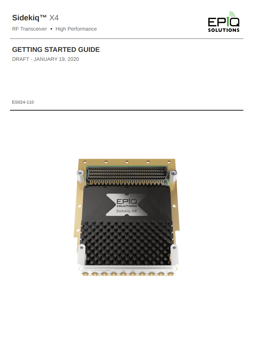
Epiq Solutions Sidekiq X4 Getting Started Guide
The Sidekiq X4 PCIe Blade includes a Global Navigation Satellite System (GNSS) add-on card which is based on a uBlox LEA-M8F GNSS module www.u-blox.com/en/product/lea-m8f-module . The GPS module is capable of using GNSS (9BeiDou, GLONASS, GPS/QZSS), external 10 MHz frequency sources, and an internal VCTCXO as its disciplining source.
Sidekiq X2 X4 Getting Started Guide
The Sidekiq X2 / X4 PDK includes either a Sidekiq X2 or X4 FMC card mounted on an FPGA carrier card and PCIe Gen3 x4 interface all hosted in a Thunderbolt™ 3 (TB3) PCIe carrier card chassis. The chassis connects to a TB3 enabled Linux laptop via the included TB3 cable. A USB cable is also included to connect the laptop with the GPS USB port to provide GPS configuration and raw data. The PDK laptop is pre-loaded with Epiq Solutions’ libsidekiq API, test applications, ERA (Spectrum Analyzer), and device drivers.